You are with me and I am with you.

IMG_5619

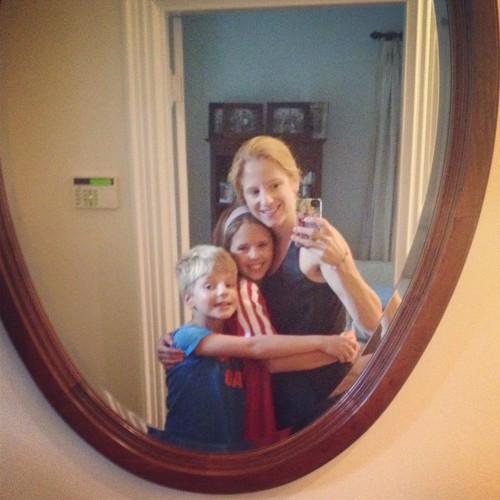
Last September, with two of these friends

I am off to spend this weekend with my dearest friends.  We met when we were 18, which means we have now known each other more than half of our lives.  We are all the same age.  We are walking through life together.  They are among the closest witnesses to my own life’s bumps, difficulties, and triumphs.  Though each of our paths is different – and have taken us as far away as London and Beijing – what we share is a genuine respect for each others’ choices and the ingrained knowledge that comes from having shared what were for me at least the most formative years of my life.

We have gathered in groups big and small over the years since college, to celebrate weddings and baptisms and to mourn deaths and divorces.  We have shared achievements large (graduate degrees) and small (children sleeping through the night – though you could argue this is not small) with each other.  We have marched in orange costumes down the central road of the campus where we all met, we have closed down more dance floors than I can count, we have all seen each other cry.  We have been each others’ bridesmaids, wingmen, and the godparents of each other’s children.  We have shared clothes, recipes, book suggestions, frantic check-in emails on the morning of 9/11 (that transcript still makes many of us cry), and many bottles of wine.  We have been on the receiving end of each others’ affection, ire, and a singing telegram dressed up as a baby.

This weekend is now the fourth annual (I wrote about it in 2010and 2012) reunion of this kind.

I have long maintained that who our closest friends are says a lot about who we are.  And on that dimension, I’m off the charts lucky.  I can’t speak for anyone else, but for me the further we get from college the more I value these women.  We met at the top of a fulcrum, poised at the very beginning of adulthood, on the cusp of our real lives.  Now we are inarguably adults.  We have made that transition together and are sharing adulthood’s startling joys and confounding darkness.  Each of our skies contains a unique constellation of children and spouses and homes and careers and parents and loves and heartbreaks and memories, but they are all full.  Perhaps most of all, we can each recognize – and celebrate – the glitter of each others’ stars.

It is with these women that I feel most at home and most truly seen.  That doesn’t mean I always feel confident around them: I don’t.  In fact I wonder, all the time, why women as remarkable as these would choose me as a friend.  But I feel safe, and loved, and known.  Our shared history – both deep and wide – is an integral part of the foundation on which my entire life is built.

I’ve written before about how certain moments in our lives particularly lend themselves to developing friendships.  This has been true for me and I value immensely the friends who are woven into our daily lives; the friends around me here who pick my kids up and drive them to practice, the friends who know to ask when I’ve had a doctor’s appointment, the friends whose children are growing up alongside mine, the friends to whom I’ve brought a potpie and a bottle of wine when they got home from the hospital with a new baby or after surgery.

But there’s something unique about the friends who’ve known you since way back when, before you were a mother, a wife, an MD or an MBA, a PTA president, a published author, a partner at a consulting firm, or a successful literary agent.  Friends who chose you as a friend when you were just you, in an LL Bean plaid flannel shirt, a pair of baggy Patagonia shorts, and a baseball cap.  Friends can tell you what your wrote your senior thesis on, remember that one night you drank too much bad white wine junior year, know who it is you first truly fell in love with, know what you called your grandparents (and met them), and with whom you speak in abbreviations and shorthand so complex that other people think you’re speaking another language.

These friends know who you are now, but they also know who you were.  This weekend, it is those intertwined years that I celebrate, and the women who have shared them with me.  Two and a half years ago I wrote this, and it’s still true:

I can feel you all next to me, your lives flanking mine, my first and most essential peer group.  We have traveled together into careers, graduate schools, marriages, motherhood.  Together we will face the aging of our parents and the growing up of our children.  We have more funerals ahead of us than behind, which is a thought both maudlin and unavoidably true.  We also have, I trust, myriad happy reunions, both formal and informal (thank you Allison, for Homosassa 2010!).  We have the joy of knowing each others’ children and spouses, and of watching each other flourish.  The road is not as linear as I might have imagined all those years ago, when I felt the future sturdy, beating next to me like a heartbeat.  Instead our paths loop forward and back, double into unexpected switchbacks, but of this I am certain: you are with me and I am with you.  Always, no matter what.
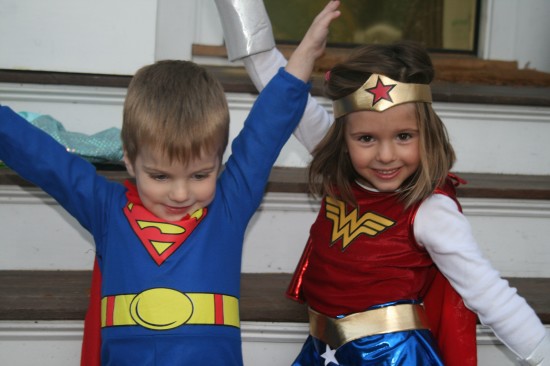
Wonder women, all alone: where feminism went wrong

IMG_6832

I read Deborah Spar’s article Where Feminism Went Wrong (sent to me by HWM, of course, thank you!) eagerly.  The first time I read it, I wept, though I wasn’t sure why.  Once again I was reminded that this subject, this lumpy, hard-to-define tangle of emotions, expectations, and raw desires touches a deep vein of inchoate emotion in me.  Then I read it again.

“Yet it was feminism that lit the spark of my generation’s dreams—feminism that, ironically and unintentionally, raised the bar for women so high that mere mortals are condemned to fall below it.”

This line rang so true that I sent it to HWM with exclamation marks.  Yes.  I relate to every word of this.  Am I a perfectionist?  Yes.  Are a great many of us?  Yes.  I imagine this is something we can all relate to.  And I do sometimes stumble, overwhelmed, exhausted.  More than once I’ve leaned my forehead onto the marble of my kitchen island, tears in my eyes, feeling angry and insufficient, disappointed in myself for being unable to do everything while simultaneously unclear on how it came to be that I felt I had to.  Spar writes that even as new professional opportunities opened to women, “none of society’s earlier expectations … disappeared. The result is a force field of highly unrealistic expectations.”  I live in this forcefield, and I know that it has equal power to seduce (we can do it all) and to destroy (oh my God I really can’t.)

And I’ve written before of how conscious I am of my mother’s and grandmothers’ struggles.  Of knowing how hard the generations who came before me – those who actually had to battle for rights and equal opportunity – fought, and of not wanting to squander that.  I call myself a feminist, enthusiastically and without apology.  This awareness underscores certain decisions I’ve made, and contributes to my deep desire to do what Spar would call “it all.”

Spar’s article’s main point (and I’m about to read her book, Wonder Women: Sex, Power, and the Quest for Perfection, so I don’t yet know if it’s the central theme there as well – see my favorite wonder woman at the top of this post) is that because women have realized how difficult it is to effect change on these topics in the broad theater of society they have turned the laser beam of that intention onto themselves.  Instead of focusing on the many, and all the women who stand shoulder-to-shoulder with them, women instead pour their prodigious energies into perfecting their individual selves.  This makes a great deal of sense to me.

“Yet because these women are grappling with so many expectations—because they are struggling more than they care to admit with the sea of choices that now confronts them—most of them are devoting whatever energies they have to controlling whatever is closest to them. Their kids’ homework, for example. Their firm’s diversity program. Their weight.”

Narrowing the lens to the entirely personal and controlling our own lives rather than focusing on the larger picture has enormous ramifications, of course.  One of them is the pressure many of us feel to be perfect, to be superwoman, which I’ve described as hugely, uncomfortably familiar for me.  Another is a pervasive, insidious feeling of loneliness which is ameliorated, at least for me, only in those rare conversations with a kindred spirit in which we can say: “You too? I thought I was the only one” (CS Lewis).  The much-discussed, much-maligned over-investment of many mothers in the lives of their children must also come from this retraining of our energies into the sphere that we can control.

In my view this behavior has another result, perhaps the most complex and charged one. Though Spar doesn’t say it point-blank in her article, I couldn’t help wondering if the judgement and negativity that so many women feel from each other has its roots here.  Doesn’t the kind of ferocious internal focus that Spar describes breed a brittle solipsism and a certain inability to empathetically cooperate?  In our quest to justify our own choices, which are paramount in a world where we too-tightly focus on our own selves, don’t we have to at least implicitly deride those of others? (I use the royal we here, because this is something I don’t believe, and try not to do, though I’m sure I sometimes fail)

I don’t have any answers here, but I am grateful for continued thoughtful discussion of the topic (see my friend Kathryn’s wonderfully interesting and intelligent take here).  The only thing I’m certain of is that there’s no single answer, and that at the end of the day all we can do is make the best decisions we can at any given moment with the information we have.  As Spar says, “women’s paths to success may be different and more complicated than men’s, and … it is better to recognize these complications than to wish them away.”  This is hard for many of us, and I’ll admit that I’m among them.  I often wonder how things would be different had I “leaned in” to my career upon graduation from business school, for example.  I don’t talk often about my professional life here, but I did write about these particular tensions for a website targeted at MBAs last month.  Spar’s piece reminded me of my own difficulty identifying the vanishingly narrow border between not trying hard enough and being realistic.

It does feel like something essential, something shiny, has been lost, though, if all we can say is we did the best we can.  I appreciate Kathryn’s acknowledgement that working full-time with children is difficult, and there’s nothing wrong with admitting that (and I’m not commenting on other models here; I haven’t lived them, and I’m certain each has its own difficulties).  I wish we could recapture the joyful, hopeful feminism that Spar mourns in her article: “the feminism … about expanding women’s choices, not constraining them. About making women’s lives richer and more fulfilling. About freeing their sexuality and the range of their loves.”

Spar ends her piece with a call to action and to arms, an invocation of all that we can be together (her use of “we” is powerful) if we released our stranglehold on our individual selves.  I’m not entirely clear on the path from here to there, but I wholeheartedly agree with and embrace her vision of where we should go:

“We need to struggle. We need to organize. And we need to dance with joy.”


What they’ve taught me

IMG_6211

How is it possible that this picture was taken five years ago?  August, 2008.  My teachers in swimwear.

It’s not a secret that I used to scoff when I read or heard people proclaim that their children were their “greatest teachers!”  Whatever, I used to whisper under my breath.  How is that possible?  But as has been the case with most of my firmly-held beliefs, the universe has proceeded to show me that my certainty is both wrong and a little bit arrogant.

By some combination of years and the maturation of both my children and me, or probably mostly through the alchemy between those things, I’m now glad to say that I have learned an enormous amount from my children.  There’s no question, in fact, that they’ve taught me and changed me more than any other human – any other factor, actually – in this life.

First and foremost, they have entirely reconstituted the way I relate to the world.  I used to be in a rush for the next brass ring, certain that wherever I was headed at high speed would hold the answers to all of my overwhelming questions.  That approach collapsed in somewhat grandiose fashion in my early 30s and now I view the “prize” as existing right here, under my feet.  Furthermore, I know that the questions are permanent and the answers evanescent.  Paradoxically, children are the most stubbornly here-now creatures in the world and simultaneously the most unavoidable reminders of how fast life passes.

A few years into parenting, realizing I was watching my children grow before my eyes, I was struck dumb by how bittersweet being a mother was.  I had not anticipated the heartbreak it entailed.  The passage of time took a seat at the table of my soul and refused to get up.  As Grace’s pants grew too short and Whit’s shoes seemed too tight overnight, I was unable to ignore the incessant turning forward of my days.  I took pictures constantly.  I wrote letters to each child on their birthdays.  I started blogging to record the little moments of everyday life that I knew I’d forget.  Were all of these attempts to memorialize my days, like insects frozen forever in amber?  Or were these actually efforts to better inhabit these days, because I realized quickly the details only really revealed themselves when I was paying attention?

I’ve decided it was the latter.  Being Grace and Whit’s mother has taught me how I want to live in this world.  It is nothing less than that.  I have learned to look at the light of this hour, and now that I can see it, I refuse to look away.

But I have learned other things, too.  Grace has taught me about the power that passion has to light up a life.  Watching her fierce attachment to and fascination with animals has made me realize viscerally something I’ve always known intellectually, which is I didn’t have that kind of animating interest in my childhood.  I still don’t.  And I wish I did.  The arrival of a dog causes genuine delight for her, she devours books on all kinds of animals, and farm camp’s barnyard chores were one of her favorite things this summer.  She has shown me something else I’ve sensed but never been able to articulate, which is that deep sensitivity can be both blessing and burden.  When I watch her ascertain the mood of a room without any formal input I can see her empathy rise to the surface.  Like a heat-seeking missile she often goes right to the person who needs her the most.  I’ve also seen the ways this sensitivity can gouge her when it’s turned inward, when she takes things to heart that don’t deserve that or allows people without kind intentions close to her.

From Whit I have learned a great deal about how the world responds to warm and outgoing people.  He is often my front man.  He is not shy in the least.  And through watching how people interact with him I’ve learned how the opposite approach (which is my default) can seem cold and aloof, distant and unfriendly.  Now and then I take a deep breath and try to plunge into a conversation with a smile, and I swear that I always think: “what would Whit do here?”  He has taught me about the ways that humor can soothe and distract, and that it is often the very best way to change the energy in a room.  He too has shown me the way true passion can manifest: the boy is a natural-born engineer, and is constantly fiddling with Legos.  He’s now brought them into the bathtub.  I’m certain he dreams in Legos.  It’s just one way that his 3D orientation to the world shows up.

I’ve learned the hand gestures to a song about llamas, who Geronimo Stilton is, and the importance of having putty to play with while you work at school.  I’ve discovered that I love Bugles, ridden a roller coaster for the first time, and learned the profound peace that can come with curling up with a child in a twin bed at bedtime, simply to be together for a few minutes.  I’ve learned the lyrics to more Taylor Swift and Katy Perry songs than I can count, what purpose all those hockey pads serve, and that there are three sizes of soccer ball.

There is so much more I could say, but even writing this has made me think about how perhaps this realization comes equally from an orientation towards gratitude as it does from one towards noticing.  And that simply takes me back to where I began this post, to the most essential thing I have learned from Grace and Whit: being aware of and thankful for all the details of this ordinary life of mine.

7 years, and a question …

IMG_1664

This is me, with my loves (missing one).  Please tell me about yourself?

Tomorrow marks seven years that I’ve been blogging in this space.  Wow.  It’s hard to believe.  I have written about all the ways that this blog has changed how I live my life, so I won’t repeat myself here.  Lately, I’ve been thinking about other names this blog could have.  A Design So Vast comes from one of my all-time favorite quotes, from Louise Erdrich’s The Bingo Palace.  I chose it simply because I loved the quote, and without any real thought at all.  It has become far more apt than I could ever have imagined.  It is, I think, an attempt to put my arms around my life’s central questions.

When I think of other blog titles, some are humorous and some are heartfelt.  

But still, there are some others that would have probably worked (in many cases I’ve written about the phrase already):

A frazzled spirit (hat tip to Amanda for this phrase)

Captive on a carousel of time (here)

Tempus fugit

Shining from shook foil (here)

The changing ocean tides (here)

The only prayer (here)

Bitter and sweet

On this seventh anniversary, I have a question for you.  I’d love to hear about who you are – where you are from, where you live now, what your family and life is like, what it is that preoccupies you, what you love.  Please?