the mundane itself

“We don’t need great writing to tell us that obviously amazing things are amazing, just as we don’t need high-powered telescopes to tell us that the sun is warm. What we need from great writing, most urgently, is an understanding that the mundane itself—snails, fireplaces, shrubs, pebbles, socks, minor witticisms—is secretly amazing.”

– Annie Dillard

I’m reading The Abundance: Narrative Essays Old and New right now (WOW) and found this beautiful, perfect passage on Calm Things.  A Dillard day.  As they all are, really.

On being in between

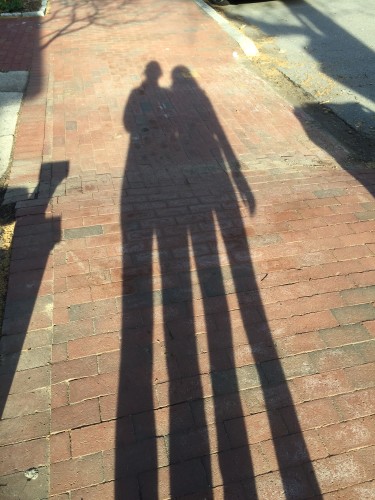
IMG_0589

I am in between.

Everything right now feels tentative, uncertain, transitional.  It’s not fully spring yet, but we’re basically out of winter.  I’m a full time professional but I am also a writer.  My children are tweens and teens, and their departure from my daily life looms on the horizon, but they are still here and they still need me (they need me even as they separate, and yes, sometimes it hurts a lot).  Everything feels like it’s in flux, though even as I write that I realize it almost always feels that way.

The one constant is change, no?  Like all cliches, that one has roots in deep truth.

I’ve never been fond of change.  And transition and the in-between is a place of discomfort for me. I’ve written before about my attraction to liminal worlds – the borders between light and dark, sea and land, day and night, child and adult.  Is it inconsistent for me to like those edges, and to acknowledge, for example, that it is dark that gives light its meaning, but to dislike change?  I don’t know.  Perhaps both of those things can be true.  Many years ago I was talking to someone who was talking about how she knew she’d be happy when X or Y was true.  Even then – I was in my early 20s – I recognized the fallacy of this way of thinking, and swore never to adopt it. Postponing living until some X or Y are achieved is a recipe or unhappiness and torment. I knew that then, and I know that now.

One thing I’m certain about is that the in-between is where life is lived. There is no arrival.  There is only getting there. It’s in the whitewater after a wave crashes that we see pieces of mica glittering. The tide is always going in and out. We are always in between, and so I wonder why some times feel more that way than others. I don’t have an answer for that. Right now is such a time for me. Learning to live with that truth, the fundamental instability of this human experience, is one of our central tasks.  That I know.

I know all that, and I still find it difficult.

Alleluia

FullSizeRender

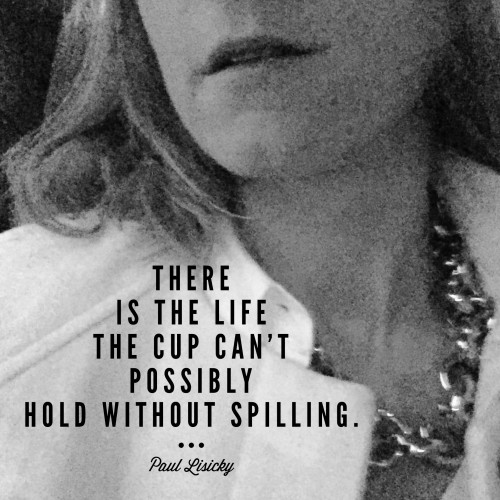
Last week I shared a quote from Paul Lisicky’s gorgeous memoir, The Narrow Door, about the life that the cup can’t hold without spilling.  I shared a shard of the same quote on Instagram, and asked “is all writing an attempt to capture some of what spills over our cups?”  I suspect it is.  I know that that’s precisely the goal of this blog, of why I started doing this almost 10 years ago.

Then, on Sunday, we went to church for Easter and I heard one of my favorite words over and over again: alleluia!  alleluia!  I kept thinking of the drops of life that spill from our memories – really, the torrent of life that we don’t recall.  That flood of drops is full of alleluias, isn’t it?

A few of mine, lately:
IMG_0470

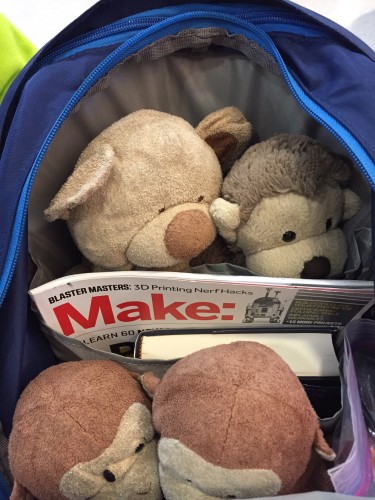
For Whit’s backpack as he headed to Florida to visit Matt’s parents.  His four friends who sleep with him, still, a copy of Make magazine, and the new Rick Riordan hardback book.  Folks, this is my son in a single photo.  Alleluia.
IMG_0474

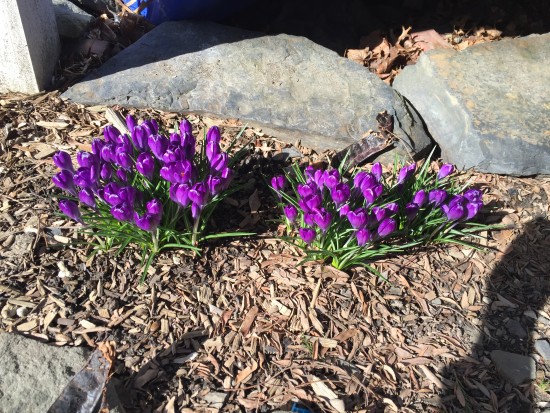
The crocuses in our backyard.  I love these for several reasons.  First, because I did not plant them, but they come up every year, this time, our 16th in this house.  Second, because I would not have noticed them unless Matt told me to go look.  And third, because they survived the late-March snowstorm we got in Boston and kept shining, bright, a harbinger of spring, a reminder that we are coming around again, always.  Alleluia.
IMG_0546

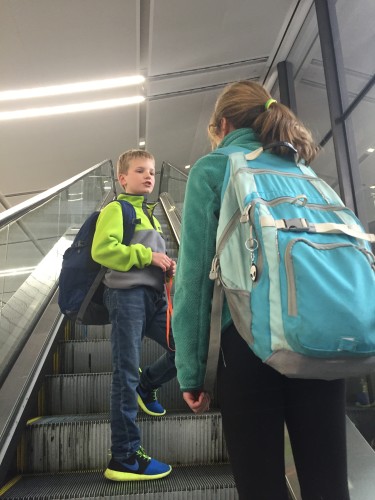
Picking Grace and Whit up at Logan after their week in Florida.  I felt grateful for the generosity of their grandparents, grateful for the intimate and comfortable relationship they share with those grandparents, grateful to have them back with me.  Alleluia.
IMG_0555

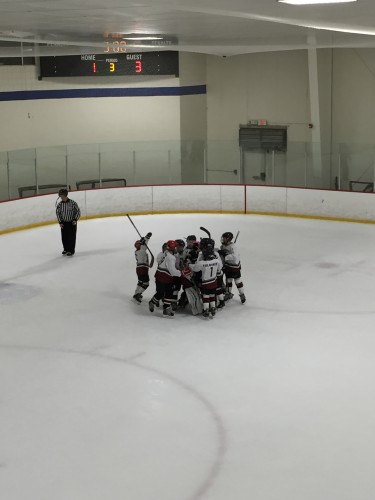
An upset win by Whit’s team in the quarterfinals of their playoffs.  Which Grace, Matt and I watched with my parents by our side.  I felt grateful for these grandparents, for their presence and nearness, for the relaxed and joyful dinner we had all together after the game.  Alleluia.

the life the cup can’t possibly hold

So why don’t I remember more of the fun we must have had during her stay?… I need to say that there was delight when that visit has concentrated into two memories.  I don’t want to define that visit by only two memories. There is always more, isn’t there?  There is the life the cup can’t possibly hold without spilling.

-Paul Lisicky, The Narrow Door

Choosing

IMG_0289

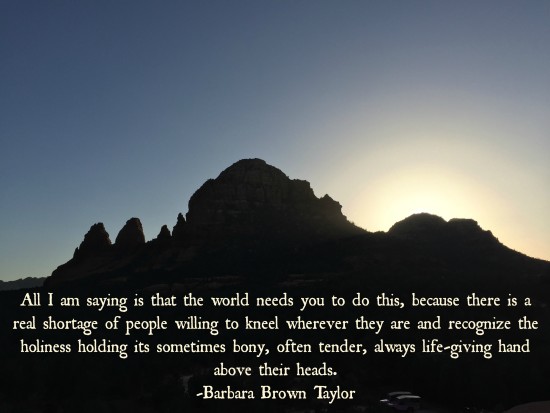
I shared this image on Instagram a few days ago.  This is what Sedona felt like – the sacred was all around us, and I couldn’t stop noticing it.  One day we went for the short hike up to the vortex on the property of our hotel.  We sat up there for a bit, talking to another guest, and Grace and Whit had lots of questions.  She was very nice, and told us all about the energy of the place.  I could tell that certain members of my family weren’t buying it.

As we walked down, though, Whit trailed behind with me.  He stopped briefly to examine the cairn he’d built on the way up, and I paused with him.  As he stood up he looked at me.  “I think I felt something,” he said quickly.

“Me too, Whit.”  I smiled, rubbed his shoulders, and we kept walking.

All week I felt the holiness in the air.  Maybe because I’d heard so much about it, who knows.  But whatever the reason, the very atmosphere in Sedona was charged with something both humming with vitality and deeply peaceful.  I thought about it a lot.  Annie Dillard rang in my head, alongside Barbara Brown Taylor (above, and the passage about altars I quoted on Monday): “What a hideout: Holiness lies spread and borne over the surface of time and stuff like color.”

And since coming home I’ve been thinking about choosing.  Do I choose to see the divinity all around me? It doesn’t feel like a choice, I can tell you that. We can remain open to the sacred that exists in our ordinary lives, of that much I’m sure.  But do we opt to see it, or does it just appear to some people?

Maybe this ambivalence about choosing what we see is connected to how I’ve always felt a little reservation about the notion that we choose happiness.  Do we choose joy?  I’m honestly not sure.  I don’t know that I choose how I am in the world – I’ve been porous since day one, and as I get older I’m getting more that way.  But is this something I choose?  I don’t think so.  It feels more like how I exist in the world, the way I’m wired, some kind of deep-seated default orientation. Not saying I wouldn’t choose it, but I’m not sure that I do.

How do you feel about the notion of choosing joy, or choosing receptivity to life’s holiness?