Georgia

e8cd9514e1ee5740336852128718d9e8

I almost wrote my thesis on Georgia O’Keeffe.  I wanted to do a joint thesis between the English and Art History departments, focusing on O’Keeffe’s work (primarily her bone paintings) and the poetry of hd.

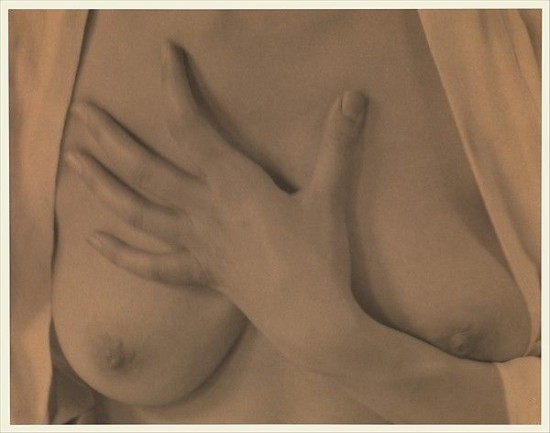
I didn’t.  I ended up, as I’ve covered at length here, writing about the topic of the mother-daughter relationship in the lives and work of three 20th century poets (Anne Sexton, Maxine Kumin, and Adrienne Rich).  I addressed the ways in which writing and motherhood both enrich and challenge each other.  The photograph above, which Alfred Stieglitz took of Georgia O’Keeffe, was the frontispiece of my thesis.  I liked the way it captured – to my 21 year old mind – the interplay between creativity (the hands) and procreativity (the breasts – the fact that O’Keeffe never had children notwithstanding).

In the mid 1990s, my parents, sister and I went to Santa Fe after Christmas.  I don’t remember much specific about the trip – my memories are mostly a haze of freezing cold and of lanterns sparkling in the early winter darkness – but I do vividly recall our trip to Georgia O’Keeffe’s home in Abiquiu.  I can close my eyes and be back there.  There were stones and small bones on each windowsill, and the entire house was filled with a hush that even almost 20 years later I recall as holy.

I recently read Dawn Tripp’s beautiful Georgia: A Novel of Georgia O’Keeffe with great interest.  It’s such a lovely book – compelling, entertaining, gorgeously written.  Tripp powerfully captures the interiority of an artist, both in Georgia’s feelings about her own painting and in her reactions to Stieglitz’s photography.

… when you make a picture – whether that picture is of a chair or a bird or a canyon – you have a chance to say something about what life is, and what it means to you.

This sentence took my breath away.  This is what writing is – and reading, too – to me.

Georgia also touches on complicated topics like motherhood and art (O’Keeffe did not have children) and the ways in which gender plays into both the making and marketing of art.  Certain parts of Georgia reminded of Lily King’s stunning Euphoria, in particular the exploration of subjectivity and the ways that male mentors/advocates were (are?) able to delineate how the public sees a female figure.  Initially, O’Keeffe experiences Stieglitz’s immediate, intense belief in her talent and future as galvanizing.  Over the years, however, his view of the artist she is diverges from her own identity, and what had been an inspiration becomes limiting, and O’Keeffe chafes at the strictures of this man’s strong vision of who she is.

For many years Georgia’s identity is defined by Stieglitz’s early (nude) photographs of her.  Despite her enormous power as an artist, she is first and foremost the images of her body, taken by a man.  This is a double insult: the female artist is reduced to her own physical self, and to one captured through the eyes of a man.  The male gaze dominates, and frames the women it sees.  Even in the 20th century.  Even now?  I don’t know.

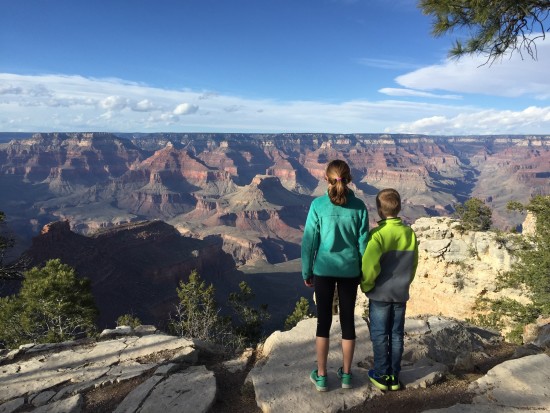
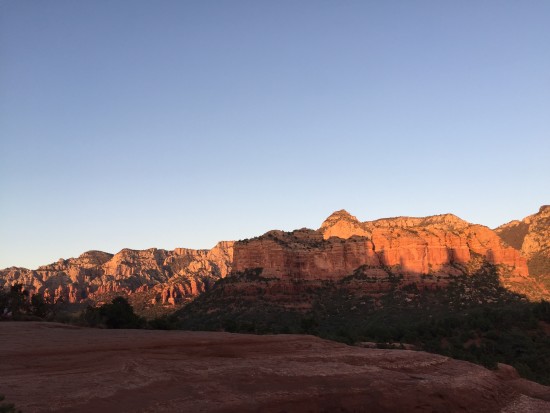
I loved Georgia and I highly recommend it.  I closed the book with a sigh, sorry to have my visit into the mind and soul of an artist I so hugely adore and esteem over.  Tripp renders Georgia O’Keeffe, who is a somewhat distant, reserved, grave character, into a complicated, humane person, full of emotions and passions and loves and disappointments. That I feel like I know Georgia O’Keeffe personally now is a testament to the beautiful writing in Georgia. Additionally, Tripp’s prose about the American southwest is particularly spectacular, perhaps because I’m so fresh off our own trip to the Grand Canyon. I highly recommend this book, and wish I could go back to Abiquiu myself now.
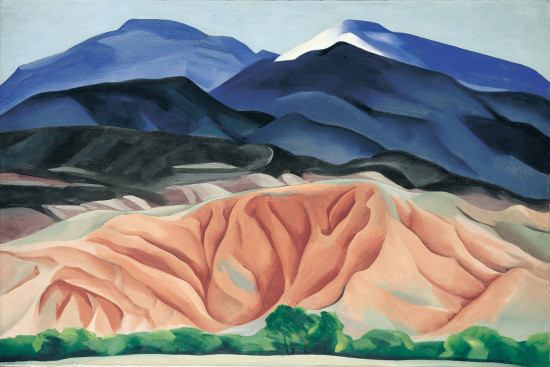
georgia-o-keefe-black-mesa-landscape

IMG_0091 IMG_0314


The line between honoring & dismissing

I am a sensitive person.  I have sensitive children.  None of this is news.

I have often in my life felt as though I have to get a grip, get over it, be less sensitive, be less intense, stop taking things personally.  These admonitions to myself are deeply embedded in my self-conscious, and I am frustrated with myself on a nearly daily basis.  I feel like my reactions are my fault.

Often, this is true.  I know it is.  When I wrote 10 Things I Want my Daughter to Know, to and for Grace, I included a specific point on this:

8. It is almost never about you.  What I mean is when people act in a way that hurts or makes you feel insecure, it is almost certainly about something happening inside of them, and not about you.  I struggle with this one mightily, and I have tried very, very hard never once to tell you you are being “too sensitive” or to “get over it” when you feel hurt.  Believe me, I know how feelings can slice your heart, even if your head knows otherwise.  But maybe, just maybe, it will help to remember that almost always other people are struggling with their own demons, even if they bump into you by accident.

It did not to take me long to realize I was writing to myself as much as I was writing to Grace.  These ten things – life lessons, central points about the human experience – were things I wanted to know, too.  This one for sure.  And I’m still struggling to learn it.

I’ve written before that parenting is an exercise in coming face-to-face with our own demons and flaws animate in another person.  Also, of course, our gifts and our deepest joys.  But it’s the demons and flaws that are on my mind right now.  When Grace and Whit come home with bruised feelings, I often feel torn about how to react.  I want to honor their reactions and sensitivities while not playing too much into them.  Does that make sense?  I don’t want them to develop the internal voice that I have, the one that says get over it already (not saying my parents gave this to me: they didn’t.  I’m not sure where it came from).  I do want to honor their feelings. And I do want to help them develop the coping skills not to be buffeted by their every reaction.

Sometimes I worry that responding too emotionally to their hurts will actually create anxiety for them – oh, wow, wait, there is a real reason to be worked up here!  I also fret that if they engage with me mostly or exclusively around hurt feelings, they’ll think that that’s the best way to get my attention.  But I know instinctively that telling them to not worry about it is dismissive and doesn’t validate what I know are authentic feelings.

What I try to do is to say I get it, I know that this hurts, and I would feel badly too, but you have to remember that it really isn’t that big a deal. Try to remember that it is likely not about you (again, a lesson I’m still learning, at 41).

I haven’t figured out how precisely to honor Grace and Whit’s feelings while simultaneously helping them learn to manage them.  Just one of parenthood’s many liminal areas, places where what I think is the right answer lies in a gray, murky zone.  Or maybe it’s not murky at all! Maybe saying I refuse to dismiss your feelings is crystal-clear.  And maybe saying you can feel something and at the same time choose to not be gutted by it is also entirely straightforward.  It doesn’t always feel that way, but maybe what’s muddying this matter for me is my own sometimes-intense empathizing.

I don’t know.  But I’ll keep trying to figure it out.

taking this chaos and making a story

One of the greatest gifts of writing memoir is having a way to shape that chaos, looking at all the pieces side by side so they make more sense. It’s a supreme act of control to understand a life as a story that resonates with others. It’s not a diary. It’s taking this chaos and making a story out of it, attempting to make art out of it. When you’re a writer, what else is there to do?

– Dani Shapiro from Why We Write About Ourselves, ed. by Meredith Maran

Things I Love Lately: book edition

I have read some great books recently, and so this month’s Things I Love is about them.  What have you read and loved lately?  I’d love to hear.

Catastrophic Happiness– I love, love, love, LOVED Catherine Newman’s new memoir.  I was honored to review Catherine’s book for Brain, Child, and that review is here.  I’m an unapologetic Catherine Newman fangirl and have been since, oh, the beginning of time. This book is just so wonderful.  I’m giving it to everyone I know.  I underlined basically the whole thing, and can’t possibly give you a favorite quote, so here are just two I adore: “I don’t always understand my own sadness. Me and my Achilles heart.” “Loss is ahead of us, behind us, woven into the very fabric of our happiness.”

In Twenty Years – Allison Winn Scotch’s new novel, out this summer, is flat-out marvelous.  No doubt I related particularly intensely to this story because Allison’s protagonists and I are the same age, and the details in their college flashbacks are incredibly resonant for me.  Beyond my personal identification, though, this is a poignant story about the formative friendships that stay with us, in ways difficult and wonderful, as we grow into adults.  It’s about the people who stood next to us as we became who we are, and the ways that history is braided throughout the present.

The Abundance: Narrative Essays Old and New – Annie Dillard’s book of essays is as spectacular as you’d imagine.  I love what Marilynne Robinson says (talk about one idol blurbing another) on the inside flyleaf: “Annie Dillard’s books are like comets, like celestial events that remind us that the reality we inhabit is itself a celestial event.”

Grace, Whit and I enjoyed a couple of new picture books recently, also:

Very Last First Time (Jan Andrews) – a reader recommended this book and I was worried it would make me incredibly sad because of the title alone.  But we finally read it and it was marvelous. A bittersweet story, for sure, but also one that explores a world I didn’t know about.  The story and the pictures are gorgeous.

Iggy Peck, Architect (Andrea Beaty) – we already love Rosie Revere, Engineer. In Beaty’s trademark lighthearted poetry and wonderful illustrations, this story talks about another resourceful, determined child.  It is inspiring and fun.  We are all looking forward to Ada Twist, Scientist.

I write these Things I Love posts approximately monthly.  You can find them all here.

INFJ

IMG_0231

I have written at length about the Myers-Briggs, about my own type (INFJ), about how recognizing my introversion helped me understand my behaviors and preferences.  Susan Cain’s Quiet was an important book for me in that realization (and, as an aside, writing for her site, The Quiet Revolution, is a huge honor).  At the end of last week, I had a fascinating exchange with my friend Aidan Donnelley Rowley about introversion and understanding what that really means.

The topic was on my mind all weekend.  I’ve always been an introvert, I know that now, though for years I masqueraded as an extrovert.  That’s something I’ve heard many times from other I’s who function in the world as E’s.  My professional life requires me to be quite E, which means that when I’m not working I am even more I.  I am often quite spent by the end of the day, worn out from many hours of interacting with others.  That explains at least in part why I’m so loath to make social plans and why evening usually find my in my pajamas, with a book or my children (or both).

I admit it was an aha for me to realize that the various MBTI types are not proportionately represented in the world.  I assumed that each accounted for the same percentage of the population.  It was surprising – and confirming of a deep sense of other-ness that has suffused my experience as long as I can remember – to learn that INFJs are only 1.5% of the population.  I know three in my “real life,” and a great many more online.  It’s one of the great gifts of blogging, to be honest, that I’ve connected with so many kindred spirits in the ether, here and elsewhere.

Last summer Grace and Whit each did their first MBTI tests (simple, free on-line ones).  I was irrationally thrilled that I guessed both of their types 100% correctly before they did them.  They are quite different from each other (though both NF, as am I) which was not a surprise.  Whit is, like my mother, a roving extrovert.  I’ve written about her before, said that “she has always attracted people to her, and, like a sun, is surrounded by more orbiting planets than I can count.”  Many of my closest friends are also extroverts, and it took me a long time to realize that I was trying to replicate my mother, I think, getting close to another sun, familiar with that energy and that warmth.  Whit is like that too.

I know that not everyone is as smitten with the MBTI as I am, and that not everyone finds the introvert/extrovert distinction as  illuminating.  For me, though, the tool is hugely powerful.  It helps me understand myself and the ways that I respond to various environments and experiences.  Susan Cain’s description of the business school I attended was particularly helpful; I see now how I’ve compensated for my own natural predilection over the years.  I also understand the ways that my professional life affects how I behave in my personal life.

Another thing I learned, once I started reading about this topic, is that introversion, sensitivity, and shyness are three separate things.  They are correlated, and I am all three, but not everyone is.  Both shy extroverts and outgoing introverts exist.  I know some of each.  This was an incredibly helpful distinction for me to understand.

Are you an introvert?  Or are you an extrovert?  Do these terms help you understand yourself and how you experience the world?