What I see right now

I take pictures of everything.  When I leaf through the last few weeks or months on iphoto or instagram, I’m reminder of countless moments that a fleeting sense of wonder startled me to stillness.  When I have those experiences, my instinct is often to photograph whatever it is that caught my attention and reminded me of the grandeur of this ordinary life.  The photograph never, ever captures the moment (the best example I can think of is falling snow: I’ve never taken a picture that even remotely shows the extraordinary beauty of falling snow) but it does remind me of those tightness-in-chest, gasp-of-breath moments that I’m grateful to have every single day.  The photographs are a record of what I see.  And, remember: what you see is what you get.

noticing1
The late-winter, early-spring light on a steeple, against one of the most devastatingly blue skies I’ve ever seen.
noticing2
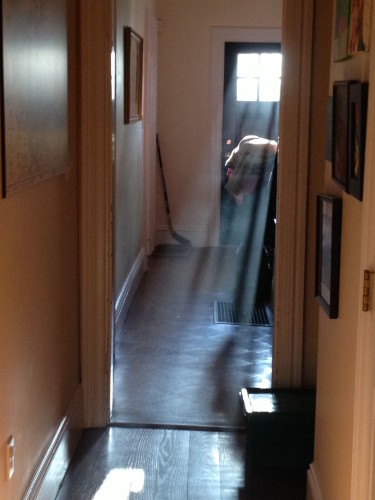
The light streaming through my front door one afternoon, when it seemed tangible, visceral.
noticing3

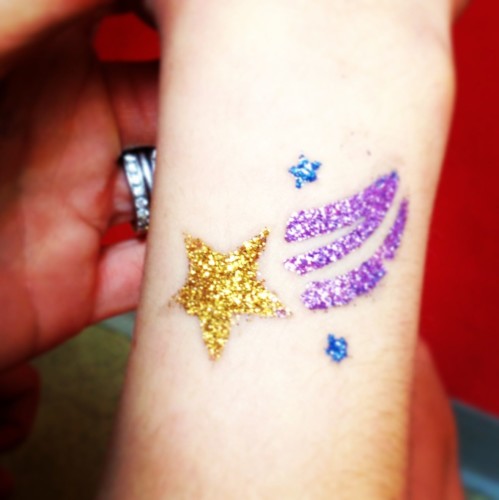
Grace’s shooting star tattoo, which inspired part of my ode to age ten: Ten is a complicated hymn, a falling star, a blink-and-you’ll-miss-it moment in time, an otherworldy flash of green gorgeousness in the dark ocean.
noticing4
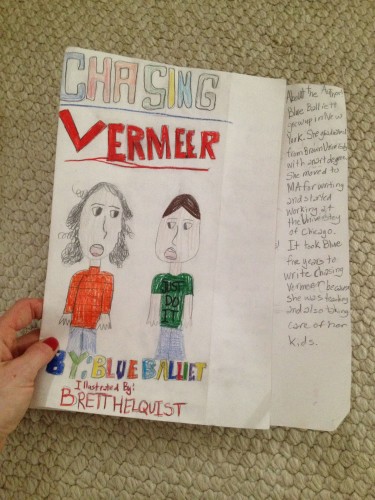
This book, that Grace wrote at school, whose “About the Author” section moved me the most.  “It took Blue five years to write Chasing Vermeer,” it says, “because she was teaching and also taking care of her kids.”  I swooned.
Moon

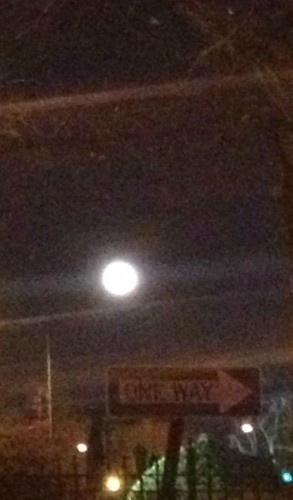
A swollen moon hanging on the horizon in Washington.  Grace actually noticed this as we walked back from dinner one night.  The moon, the moon, the moon: a constant reminder that we need dark to be able to see the light.

IMG_8304

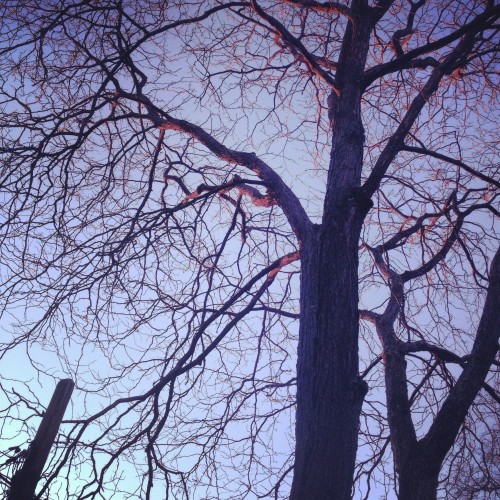
The sun coming up, as seen on the tree outside my kitchen door.

What are you seeing these days?

Let Go

Let go of the ways you thought life
would unfold; the holding of plans
or dreams or expectations – Let it
all go. Save your strength to swim
with the tide.

The choice to fight what is here before
you now will only result in struggle,
fear, and desperate attempts to flee
from the very energy you long for.

Let go. Let it all go and flow with the
grace that washes through your days
whether you receive it gently or
with all your quills raised to defend
against invaders.

Take this on faith: the mind may never
find the explanations that it seeks, but
you will move forward nonetheless.

Let go, and the wave’s crest will carry
you to unknown shores, beyond your
wildest dreams or destinations. Let it
all go and find the place of rest and
peace, and certain transformation.

~ Danna Faulds

Another wonder from A First Sip.  A year or so ago I wrote, on twitter and Facebook, that “I truly believe that all our suffering comes from our attachment to how we thought it would be.”  I also wear the words Let Go around my neck.  This poem speaks to me.

GIVEAWAY: The Cassoulet Saved Our Marriage

When my copy of The Cassoulet Saved Our Marriage, I opened it hurriedly and dove in.  One of the editors, Lisa Catherine Harper, is both a friend and a writer I adore.  I read, loved, and reviewed her first book, A Double Life: Discovering Motherhood.  Other writers I love, like Deborah Kopaken Cogan and Catherine Newman, also contributed.  This book is a wonderful meditation on what food means in the context of a family.

When I think about food and family, my mother comes immediately and always to mind.  I wrote about her, years ago, about how she embodies the sentiment that casseroles are grace.

I am deeply honored to share a beautiful essay by Lisa Catherine Harper here today.  I love everything she writes, and this is no exception.  I know you will too.

I’m delighted to offer a giveaway copy of The Cassoulet Saved Our Marriage.  I can’t recommend this book enough: you will love it.  Please leave a comment here – if you want to share a story of food in your life, that would be terrific! – and I will choose a winner on Sunday. 

Still Life with Orange

By Lisa Catherine Harper


In our backyard, we have a gorgeous, old orange tree. Its leaves are thick and glossy, and come winter, it’s studded with more bright fruit than we know what to do with.  We snack on it, and make arancello, and squeeze gallons of fresh juice, and still, we have sacks and sacks to give away.  In the spring, when the blossoms for next year’s crop are budding like tiny, fragrant constellations, we have a few brief weeks when we can picnic under its sweet-smelling shade.

For me, the orange tree is a California dream and everything the fruit of my northeastern childhood was not.  No matter how many years I live with them, those oranges still seem to come from a faraway place. For my children, though, the tree is ordinary, the stuff of home.

And this is where things get interesting. I think that it’s in this tension between the extraordinary and the ordinary, the unusual and the mundane, that traditions are made. The fact that those oranges are a part of our everyday life is what makes them special.  We wait for them, we watch them grow, we harvest them, we eat them. Most of the time, it’s just there, a pretty tree that stands beyond our kitchen window, as much a part of our yard as the cats.  But when I bother to pay attention, in those out-of-time moments when I become aware of its natural cycle, then I know that–without trying or doing anything special–we have a tradition.

What are family food traditions? How do they come about? And why should we care? These are the questions I’ve been thinking about for the last four years as I worked on my new book, The Cassoulet Saved Our Marriage: True Tales of Food, Family, and How We Learn to Eat.  As my co-editor and I selected stories, submitted by a wide range of food writers, fiction writers, essayists, and journalists we found ourselves thinking hard about our own family food and we realized we wanted to tell a different story, one that moved away from mantras and manifestos and talked about the real issues facing real families every day. Not what we feed our families, but how, and why, and why should we care?

The stories we included in Cassoulet share two important things. First, family food isn’t just the food we feed to our kids.  Husbands feed wives, dads feed kids, siblings feed each other, children feed parents. Second, family food doesn’t necessarily involve special occasions or long-standing traditions. As the stories accumulated, we had accounts of everyday food, snack food, despised foods—these were at least as important as celebratory food, or recipes sanctioned by generations. Writers remembered the absence of food, too, because for better, for worse, in sickness, and in health, every aspect of our relationships is implicated in our family food. It’s something of a cliché to say food is love, but our tables rehearse—explicitly, implicitly—the joy and connection of our most intimate relationships as well as the conflict. What became abundantly clear is that family food is shared in relationship, and it reflects these relationships.


The point, though, is not to give us parents one more thing to feel guilty about. We don’t need more rules, or more people judging us.  What many of us need is simply to broaden the conversation and understand that what happens in the kitchen or at the table is at least as important as the ingredients that end up on the plate.


And here’s where my orange tree comes in.  In a very simple way, it reminds me to pay attention to what I already have. Sometimes, the simple act of picking an orange is enough to restore us.  In the midst of all the rush and bustle of family life, in the middle of work and homework and carpools, sometimes, a sustainable family food culture is more important than sustainable food. My family’s food will not look like yours-and this is the whole, beautiful point.  In our family, we have the tree. Your family will have something else–a red sauce, or a pancake recipe, or a garden.  We can start by telling our stories: this is what family food means in our life. What does it mean in yours?


Photo Wednesday 39

IMG_8162

IMG_8163


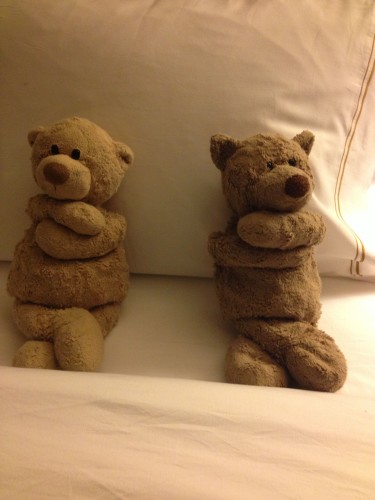
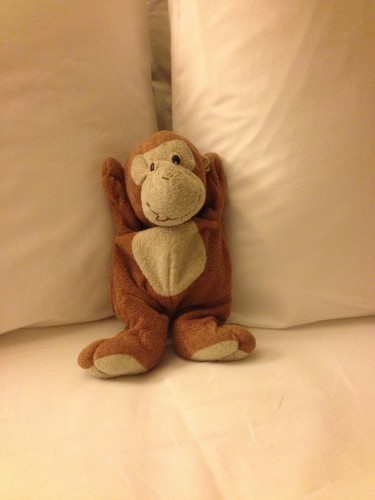
This is how we found Brown Bear, Yellow Bear, and Beloved when we returned to our rooms after dinner last week in Washington. For some reason the way housekeeping posed the three of them just cracks me up. I also love seeing their dear, worn faces, because they are such a snapshot of right now in our lives.

The Navy hymn

IMG_8020

Eternal Father, strong to save,
Whose arm hath bound the restless wave,
Who bidd’st the mighty ocean deep,
Its own appointed limits keep.

Oh hear us when we cry to Thee,
For those in peril on the sea! Amen.

Eternal Father, lend Thy grace To
those with wings who fly thro’ space,
Thro wind and storm, thro’ sun and rain,
Oh bring them safely home again.

Oh Father, hear an humble prayer,
For those in peril in the air! Amen.

Oh Trinity of love and pow’r,
Our brethren shield in danger’s hour,
From rock and tempest, fire and foe,
Protect them where so e’er they go.

Thus evermore shall rise to Thee
Glad hymns of praise from land and sea! Amen.

I love the Navy Hymn.  We sang it at the funerals of both of my grandfathers, and it ran through my head without cessation last week when we visited the Air & Space Museum in Washington.  As I walked through an echoingly large room filled with airplanes and rockets, I thought about how I come, without question, from those who traveled in the air and in the sea.

I come from two long lines of sailors.  In fact, my parents famously met when my father (leaving a party as my mother arrived, a telling detail if you know their individual predilections towards earliness and lateness now) noticed a silver brooch of a sailboat my mother wore.  My mother and father are skilled and passionate sailors, and I would call the ocean and sailing the central passion of each of their lives.  My grandparents all sailed.  These were people who weren’t often in peril on the sea, because they knew what to do.  Sometimes, when Grace gets nervous about the sailboat heeling over too steeply, I whisper in her ear that there is nobody, ever, that I’d want at the helm in a storm other than Nana and Poppy.  That’s the truth.

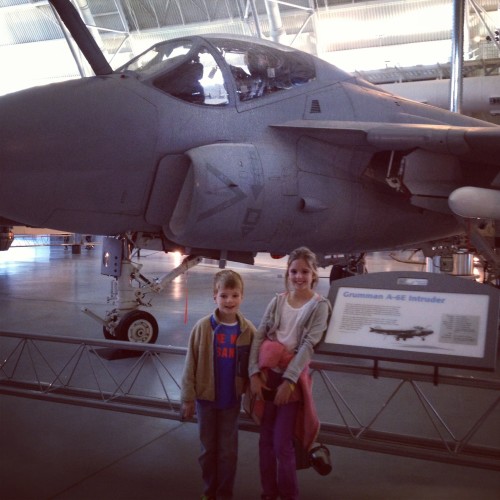
But my grandfathers were also pilots, which is what I was thinking of at the Air & Space Museum.  My paternal grandfather, whose death we recently mourned, designed airplanes his whole life.  The photograph above shows Grace and Whit in front of “his” airplane, the A6 Intruder.  When I see this airplane, inelegant but tremendously effective, I think immediately of the corner of the room in Pops’ last apartment which he used as an office, which featured several airplane models (including one which now sits in my dining room).

Pops designed airplanes, and my maternal grandfather, Ba, flew them.  He flew across Africa in World War 2 in the Navy, and he was also a commercial pilot upon his return home.  I felt the presence of both of my grandfathers in that cavernous hangar full of planes and rockets.  And I thought about how I’m descended from travelers, people interested in flight and the air, in sailing and the water, in the angles of wind and water and fiberglass.  I come from people of the air and sea.  There is a restlessness in my blood that I often wish I could shake, overcome, deal with; perhaps instead I need to recognize that it’s just a part of the inheritance that comes along with my names, my red hair, and the shoebox of Princeton paraphernalia in my living room.