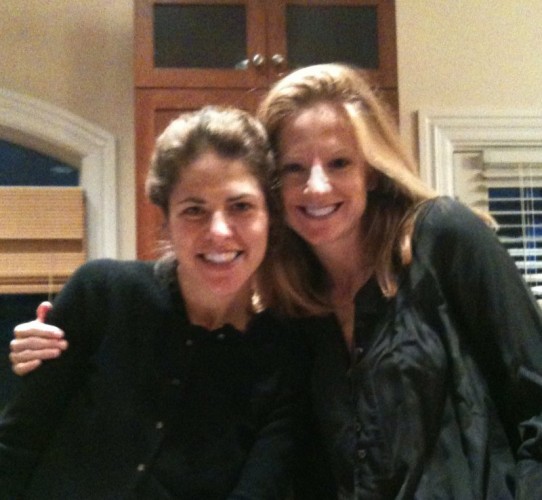
I was delighted when Launa agreed to participate in Present Tense. Notably, she responded with her own title to her answers: More Tense Than Present.
1. When have you felt most present? Are there specific memories that stand out for you?
In childhood, the colors were brighter, the music transcendent, and the having of new ideas felt so exciting I could hardly stand it sometimes. I was one of those “highly sensitive children,” and no experience left me unmoved.
I recall the taste of yellow raspberries at my grandparents’ farm, the heat of a hayfield in the summertime, or the feeling of lying on a hill and looking up at the stars. I recall pure embarrassment, unbearable longing, intense pride and rapt focus, before any of those emotions became mixed or vexed or folded into one another.
But in my early adult life, sometime in my early twenties, a curtain fell, dividing me from the world, and it suddenly required effort to just Be.
I’ve often wondered why, and I toggle between two explanations. The first is that with adulthood came multi-tasking. Once I had a job, and a marriage, then children of my own, I suddenly had more people to pay attention to, more people to and for whom I was responsible, and thus all my attention became divided. And compromised in a way.
I remember thinking as a child that adults were often so foolish in their preoccupations. And now here I am, myself, often preoccupied, missing out on life’s great smells, tastes and sights because I have to get myself and my family somewhere at a certain time.
Sometimes that weight of adult responsibility leaves me feeling more tense than present.
The second explanation I have for this change in myself has to do with what I have read about brain development: that as my ability to think in abstractions became more powerful, the power of living in the world of raw experiences was gradually filtered through language, and trumped by the power of ideas. My brain prefers theories about life to life itself, a fact that has been proven true every time I’ve taken a Myers-Briggs personality assessment and found myself to be an overwhelming “N.”
Because of this preference for thinking over sensation, I often feel most present in language or ideas: reading a new book, pulling together a big idea out of a jumble of thoughts, writing something I care about. Perhaps as my brain developed into its adult form, and as I became a reader, a teacher, and a writer, the part of me that deals in heady, fascinating abstractions gradually overpowered the part that could absorb itself fully in a walk down a country lane.
(And if my two distractible children are along on that walk on the country lane, threatening to get themselves lost while simultaneously bickering and whining for a snack? Forget about it; presence ain’t in the cards.)
2. Do you have rituals or patterns that you use to remind you to Be Here Now?
I always thought I should develop or adopt these sorts of rituals. I knew I “should” be here now in the same way that I “should” floss more often.
But somehow, in the crush of all the busyness and multi-tasking of adult life, I have never managed it. Since work and responsibilities always felt so pressing, they came first. Then, once all that work was done, I always wanted to do something else. So, for a long time, I thought of these self-care being-present rituals as though they were one of those really nice things that other people do: like sending Hallmark Cards.
But as I have thought a little bit harder in order to answer your questions, it has occurred to me that I do have rituals to bring me into the flow of presence. They just don’t look like yoga or meditation or conscious breathing while ringing little prayer bells.
So, thanks to you, I realized that there are three major exceptions to the muddled multitasking rule of my adult life: Singing. Eating. And reading/writing.
Whenever I sing – either on-stage with my goofy neighborhood rock band, or harmonizing with Carole King on the stereo, or even just belting out the chorus of “Don’t Pass Me By” with my kids in the car, I always feel fully alive, and present in the moment.
The second doorway to fuller presence, which our family has discovered in our current year away together, is being à table.
Before we took this year away, our family ate the right numbers of calories, and absorbed all the right nutrients, but our meals felt too rushed, too jangled. Here in France, there is a process: buying fresh ingredients, swirling them together to make a new combination of smells and tastes, setting the table, and then calling everyone together. Here, people eat only at a real table, usually in company. You never see somebody just walking down the street mindlessly eating a snack. Even little kids, at their day care centers, eat several courses slowly, with a knife and fork. And then a cheese course.
I didn’t set out to learn to cook French food, or to make meals into a religion; the ritual of a family meal is just something we all have absorbed from being here. Our eating now has a rhythm. Meals move slowly. They have lots of steps, and require attention. We’re all uber-distractible people, but sitting down to eat together three times a day pulls us out of our separate realities and into more conscious connection with each other.
Before the meal, we hold hands and say something that makes us thankful. Then, afterwards, we all clean up together, usually with loud music playing, in a sort of pagan bacchanal we call “dance party.”
Our ritual of meals and cleanup doesn’t always lead to family harmony and togetherness and peals of happy laughter. Sometimes the kids end up arguing, or we nag the kids or each other. But just as often, there is singing and warm togetherness as we laugh, as we slice multiple kinds of cheese, as the dishes get washed and the leftovers packed away into the fridge.
So there’s singing. And there’s eating. But the last “ritual” is something I keep all to myself. Whenever I have a chunk of time, I immediately open up a book, a nerdy intellectual magazine, or a new window on the laptop, and start reading. I’ll go to thebrowser.com and read the recommended articles. I’ll burrow into the sofa with a new copy of The New Yorker, and let the time flow by me like water. Those moments I find to read — or now, to write, since I’m keeping a blog about our year away (http://whereverlaunagoes.blogspot.com) — feel like nothing short of being truly alive. Those moments, I am barely aware of anything around me, but still fully present, on fire in the world of my own mind.
3. Do you have specific places or people that you associate with being particularly present? Who? Where? Any idea why?
My husband Bill and I promised each other nearly twenty years ago that “someday” we would live overseas with our kids. When we talked about that “someday” we had a whole lot of high-toned ideas about everything we would learn from being in a foreign culture.
Now we’re here in southern France; “someday” has become today. Everything is different, and the experience of the new and unfamiliar has shaken us all awake. Once again, as in my childhood, the sensations are more intense, and the emotions are raw. I’m now once again alive to the color of the sky, to the sound of birds in the morning, to the unexpected flutter of joy, to the agony of embarrassment, or to the stab of homesickness.
We’ve learned a ton about this new place so far from home. But we’ve also learned a whole lot more about ourselves as a family, in all the time we’ve spent together here in a place that is so unfamiliar, stripped of the protective coating of a familiar culture.
We flew thousands of miles away to find our way home.
For the first ten years of our life as a family-with-kids, both Bill and I both worked at jobs that felt very intense. He was a manager at a nonprofit that did legal and social work for poor mentally ill New Yorkers. I taught English, then was the head of a small elementary school. We were that classically stressed-out New York family. There was no end of things to distract us from one another, and even from ourselves.
This year, we both stopped working in the very late spring, rented out our house, and then set out with our kids in tow for a full-family sabbatical. We suddenly found ourselves together 24-7.
This exercise in overwhelming presence has, by and large, been exceptionally great. But many parts of it have been difficult. For example, French families — especially in a small town — are deeply insular. We had been warned, but we didn’t understand until we got here. Our French was inadequate to the task of communicating what we felt, who we really are. These things made it harder for us to connect to other people, but also have pulled us in closer towards one another. School here was also a whole hell of a lot harder than we ever thought it would be for our kids, so hard we eventually pulled one of our kids out to homeschool her.
This year, we frequently have nowhere to turn aside from one another.
So being “present” doesn’t always mean being happy and joyful and blissed-out. It also means being open to things that are difficult, with no easy way to escape.
4. Have you ever meditated? How did that go?
I do a sort of self-hypnosis thing I invented to get myself through really awful situations, like giving birth to a 10 1/2 pound baby, or enduring a panic attack on an airplane in turbulence. But that’s really the opposite of meditation — pulling myself away from awareness of the present, rather than into it. So far for me, meditation is still like Hallmark cards and flossing — one of those nice and virtuous things other people do while I’m singing. Or cooking and eating. Or reading and writing.
I’ve always thought that this impatience with meditation is a residue of my own childhood. When I was a kid, my mother went through a phase of meditating every day. It was the 1970’s, and although my mom was not a particularly countercultural sort of person, (I can’t imagine anyone who has less in common with Ringo Starr) she became absorbed by Transcendental Meditation. She had this secret mantra and needed to be left alone to meditate, sitting silently in an enormous pink chair in her bedroom.
I’m sure that for her it was a great thing and helped her through the challenge of raising a pair of pesky sensitive kids. For my sister and me, Mom’s meditating just meant an interminable period of time when we had to be really quiet in the house. Maybe it was only for twenty minutes or so at a time, but at the time it felt like hours. I remember is sitting outside her bedroom door, peeking through the keyhole, passionately wishing she could be done already so I could go back to pestering her.
5. Has having children changed how you think about the effort to be present?
I have a complicated answer to this question, one of which I am still working through and trying to accept. I adore my children, and would do anything for them. But sometimes being their mother feels really, really difficult. It’s them, it’s me — it’s all of us.
I know that they deserve plenty of my undivided attention, no matter how much I want to curl up and read a book right when they need me most. I also remember how much I wanted my own mother to stop her meditating, make me a nice box of jell-o pudding, and listen to me talk at her.
But the overwhelming togetherness of this year has also reminded me that parents and children need separate space, separate time, distinct moments to be alone. It’s good to be present together with one’s children, but to do that without getting irritable and solipsistic, you also have to be present with your spouse, with your friends, and with yourself. As I have watched my children this year become passionate readers and writers themselves, I am starting to trust myself more on this score.
To put it another way, sometimes it’s good to be singing, full-throttle, with your friends. It’s good to eat a long meal with your kids and make them clean up with you afterwards. And it’s good to be alone on the sofa, deep in a book, or even meditating, if that’s what works for you. Get yourself a mantra and a big pink chair, and knock yourself out, if you can get the kids to be quiet long enough. But all of those things have to be balanced with paying the bills, catching up on email, and taking out the trash.
Mothers can be present, just not all the time to everybody else and themselves as well.
6. And just cause I’m curious, what books and songs do you love?
Everything by Toni Morrison, but mostly Sula. Morrison taught me that there are so many ways to be a woman. Also Louise Edrich, Ceremony; Maxine Hong Kingston, The Woman Warrior, and all the books I used to teach in 10th and 11th grade English classes, and thus learned almost by heart. I also love Jeffrey Eugenides’s Middlesex, Jonathan Safran Foer’s Everything is Illuminated, Lorrie Moore’s A Gate At the Stairs, Mary Karr’s Lit, and Jonathan Lethem’s Chronic City.
Now that I’m in small-town France and can’t get many real paper magazines in English, I can’t seem to stay off thebrowser.com
In terms of music, I love everything Bruce (Springsteen), whose songs have gotten even greater since my kids start singing along. I love the songs I sing with the neighborhood band of 40-year-old guys. And, because I am at heart one of those kids on Glee, I love everything sung by the Amherst College Bluestockings.
I love a bunch of books from my childhood that have now cycled back for my kids: The Big Orange Splot, from which I learned everything I need to know about home décor. Also The Maggie B., The Chronicles of Narnia, the Little House series.
And, from my life as an educator and parent, I love great books about raising children. The Ames series (Your One Year Old; Your Two Year Old; etc, on up through age 13.) has been an exceptionally great resource for me as a parent and as a professional. I was deeply moved Judith Warner’s paradigm-shifting new book, We Have Issues. But the best book ever on child rearing? Wendy Mogel, The Blessing of a Skinned Knee.

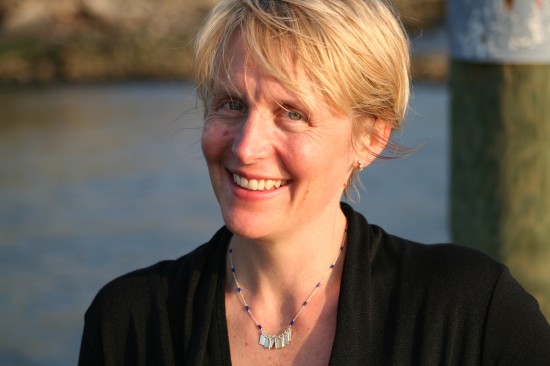
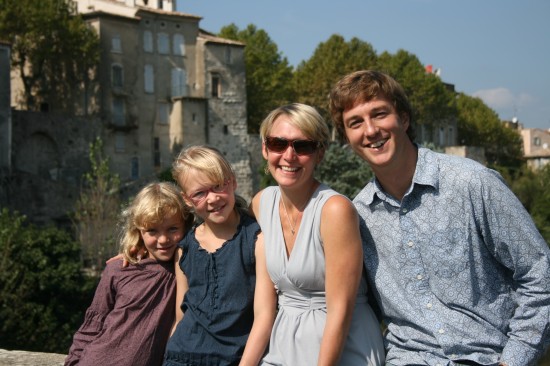
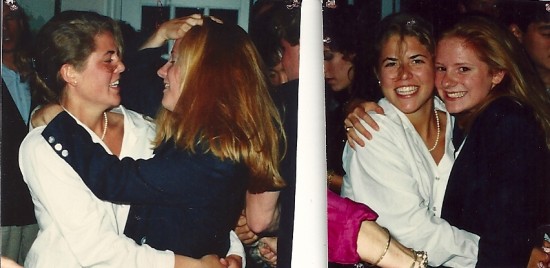 We met in the fall of 1990 in Exeter, New Hampshire, in Ms. Iwakuni’s French class. We were fast friends, and I was very grateful to Gloria for her warmth and welcome, in a place where I was brand-new, awkward, and incredibly far from home. I’ve written about how few specific memories I have of boarding school, but one very vivid one is from the spring of 1992. Gloria and I had both applied early to Princeton. She got in (no surprise: she is a superstar) and I got deferred. The day that the regular admission answers arrived, finding many of us crouched in the post office waiting for letters to be slid into our little glass-fronted mailboxes. Mine arrived. It said, in bold all-caps at the top: “YES!” I skipped out of the post office, elated, thrilled, and a little bit shocked. I walked out into the bright early-spring New Hampshire sun and saw Gloria across the school’s main quad. She saw me and I smiled broadly at her. “I got in!” I said, loudly enough for her to hear, and sprinted towards her across the quad. We hugged. I’ve never forgotten that moment. She was the first person I told the news that in many ways shaped my adult life.
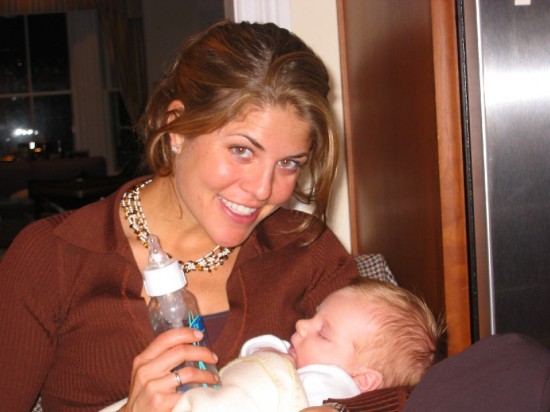 She came up, on the day I realized I’d forgotten her birthday, to be at Whit’s christening as his godmother. The photograph above is the evening, post-ceremony, in my kitchen. Since that day we’ve been in much closer touch. It has been a particular joy to watch her very real relationship with Grace and Whit. They both adore her, and I feel like she’s especially able to relate to Grace because she, too, has a brother who is 27 months younger. I am consistently touched by the significant effort she makes to see them (and me) as much as possible, even across an ocean. Grace and Whit walked down the aisle in her wedding to her wonderful husband Jim, a gesture that meant an enormous amount to me (and to them).