Carsickness

car2

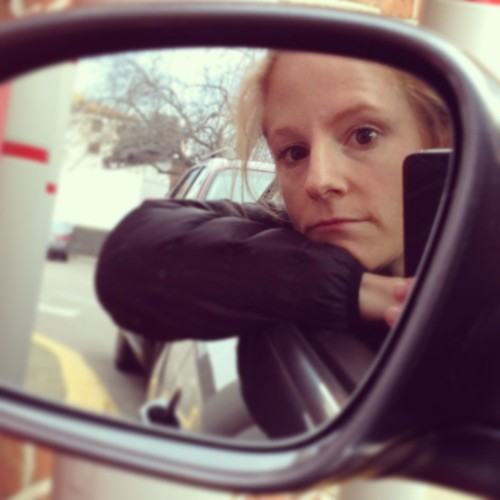
For as long as I can remember, I’ve gotten carsick.  Quickly and very.  I may have mentioned the week-long safari Matt and I went on the summer after we met?  By lunch on the first day I was throwing up behind the Jeep.  I spent a week nauseous and vomiting all over Kenya.  It was very romantic.  I’m lucky he stuck around, frankly.

I very rarely get seasick, and I am always fine on airplanes and trains.  But, oh, cars.  My nausea is immediate and often powerful.  I’ve been wondering what this carsickness is about, and what it can teach me.

Is it another manifestation of my need for control?  Because if I am driving I’m fine.  It’s true that I’m an irritating passenger, with opinions about how and where and when to drive (“that’s a lot of wiper,” said under my breath when I deem Matt as having too aggressively paced the windshield wipers for a drizzle, is one of the comments I’m roundly mocked for).  So maybe it’s about not being in control, and that literally making me sick.  I’m not sure, though.

Maybe it’s connected to how I have always disliked rollercoasters.  The truth is that I have slowly been getting over my fear of rollercoasters, mostly because I’ve started riding them with Grace and Whit.  Of course we’re talking about the rollercoasters at Story Lane, or other pretty tame rides.  I’m still not comfortable on any kind of real rollercoaster.

A few years ago, when we were at Disney with the children, Matt goaded me into going on Rockin’ Roller Coaster with him at Hollywood Studios.  I was so tired of being mocked that I agreed to try it.  We got into the car, me fighting a wave of panic, and I asked why we had a harness over our shoulders.  Oh, no reason, he said dismissively.

That ride was among the most terrifying few minutes of my life.  As the ride came to a screeching finish, Matt looked at me and burst out laughing because, as he said between guffaws, I was literally green.

Perhaps, as I noted a couple of years ago, the swooping up-and-down movement along the tracks is simply too close to my own internal topography, which is already a kind of roller coaster.  I climb to outrageous joy and plummet to tearful heartache every single day.  Hell, I do that every hour.  Just inside my own head and heart.  Maybe it’s too overwhelming to also have my body do this.

Or maybe my propensity to get carsick is simply the universe pushing me to be still.  The surest way to get sick, for me, is to distract myself.  If I read, if I look at my iPhone, if I turn around and talk to the kids in the back seat, even if I engage too much with the radio: boom.  But my only chance at not being nauseous is to sit still, look out the window, and pay attention to what’s outside.

I’m not sure what the root cause of my carsickness is.  Maybe it’s just the way my inner ear is constructed.  Or maybe it’s some mysterious amalgam of all of these factors, whose precise components can’t be discerned.  I don’t know.  But I do know that for now, I’ll turn off the music and look out the window and watch the horizon, and hope that that is good enough.


An elegy to what was and a love letter to what is.

IMG_4448

I have never been particularly maternal, I never babysat, and I never daydreamed of the day I would have my own children. I was as surprised as anyone, then, when I realized that motherhood was the love affair of my life, the subject that found me, the role that made everything else in my life make (at least some) sense.  After Grace and I made it through months of colic (hers but also, I’m pretty sure, mine) and a dark year, we entered a period that I think of now as what Laura Ingalls Wilder called the happy golden years.

But lately, I am in a new season of motherhood.  At first there were isolated events, rolled eyes and crossed arms, flares of aggravation I did not understand.   These moments, each on their own as small as a speck of light in a wide night sky, came together into a constellation that was eventually impossible to ignore.  Something is changing.  Something is different.

For a long time I worried that my days with Grace at home would never end.  I waded through her dark and sleepless first months for what felt like an eternity.  Then, truthfully, I rejoiced that that time had ended.  We dove into the happy hours of early childhood, celebrating all the things we could do together – swimming, tennis, reading, adventures. Grace (and her brother) was my favorite companion and I was hers.  And now, suddenly, the end of something is undeniably in sight.  It reminds me our annual summer trip to the White Mountains: we hike for what seems like forever in the trees and are always startled when, all at once, the summit comes into view.

Grace’s years at home with me are well over halfway done.  The time of me being her favorite person, of my company always being her first choice, are surely almost completely over.  I am so keenly aware of how numbered these days are that I can barely think of anything else.  It is not an exaggeration to say that my every experience is filtered through the prism of time’s passage.

I have said goodbye to sippy cups and diapers and sleep schedules and baby food and cribs and high chairs and even, mostly, to carseats.  I have welcomed yoga pants that I sometimes mistake for my own when I’m folding laundry, a riot of peace sign patterned sheets and towels, a closed bedroom door, and handwritten postcards home from sleep-away camp.

I don’t worry about SIDS anymore, or about whether I’m producing enough milk, or about putting a baby to bed slightly awake so she doesn’t get used to falling asleep in my arms.  Instead I worry about Facebook, and friends who have cell phones, and when it’s ok to get her ears pierced, and the insidious approach of eating disorders and body image issues.

The predominant emotion of this time, as Grace embarks upon the vital transition from child to young adult and to an autonomous and independent sense of self, is wonder.  Wonder upon wonder, so many layers I have lost count: there is awe, fear, and astonishment, and also an endless list of questions.  I gaze at my daughter, coltishly tall, lean, all angles and long planes, and wonder where the last 10 years went.  It is not hard to close my eyes and imagine that she is still the rotund baby or chubby toddler that she was just moments ago.  At the same time I can see the young woman she is rapidly becoming in her mahogany eyes.  And there are so many things I wonder about: separation, mood swings, puberty, boys, technology, school pressures, body image, and more.

I’m reminded now and then of the fears and concerns that flummoxed me when Grace was an infant.  The world shifted more then, when I brought home a crying newborn, but this transition feels second only to that.  Then as now, I’m guided by only two things: love and instinct.

Overnight we’ve gone from a world where a never-ending ribbon of days unfurled in front of us, so many they overwhelmed me, to one where every moment feels finite, numbered, and, as a result, almost unbearably precious.  It feels like as soon as I figured out how to truly love being a mother with children at home, it’s almost over.  More and more, I feel the tension between holding on and letting go.  I want to help Grace find her footing in the uncertain terrain of adolescence, but I never expected it to be so bittersweet.

And all I know what to do as we move into this new season is to pay attention, to look and listen and write it down.  Everything I write, everything I live, an elegy to what was and a love letter to what is.

This post originally appeared on the Huffington Post.

Let’s be in awe

“Let’s be in awe
which doesn’t mean
anything but the courage
to gape like fish at the surface
breaking around our mouths
as we meet the air.”

– Mark Nepo

The noise can be too much

IMG_4432

For the most sensitive among us the noise can be too much.
– Jim Carrey, to Philip Seymour Hoffman

I have not been able to get Jim Carrey’s tweet on the occasion of Philip Seymour Hoffman’s sudden death out of my head.  That line has been running through my thoughts pretty much constantly since Sunday.

No.  I am no Philip Seymour Hoffman, that’s not what I am saying.  And I am not saying I know anything about his private demons or struggles.  But I do know what Jim Carrey’s talking about, and I’ve written about it before.  The loneliness that is curled at the core of my human experience.  The quiet, jagged seed of desolation and sorrow that is buried deep inside of me.  The emptiness that I wrote to Grace about, warning her of the behaviors that so many people indulge in to fill the echoing void.

I’m convinced that this gnawing loneliness is a universal aspect of being human, but I’m equally certain that people are aware of it to varying degrees.  And there are many ways that people try to distract themselves from feeling it, and some of these behaviors are more socially acceptable than others. For some, this loneliness shows up quietly in the background, while for others it becomes an unbearable weight they’ll do almost anything to escape. The search for relief can take many forms—through work, entertainment, or relationships—but it can also lead to unhealthy coping strategies. Addiction often grows out of this very attempt to numb or outrun the discomfort of isolation, if you think you’re one these people you can contact now here to get professional help for this.

Distractions can be helpful to try to avoid loneliness but some could be unhealthy, some of them are also riskier, as Seymour Hoffman’s story vividly demonstrates.  It’s the socially acceptable avoidance tactics that have always been my personal favorites.  This can, and does, lead into a trap: almost exactly two years ago I wrote about the dangerous complexity that is born when the ways you hide from your own life are applauded by the world.

I’m learning to stop avoiding my own life by focusing on external achievement, and beginning to let authentic goals replace brass rings.  There is no question I’m making progress.  But the thing is, as I get quieter and more in touch with the whisper of my own voice, somehow, the world gets noisier.  Maybe that’s what happens, as paradoxical as it is: we shut out the noises, the coping techniques that blur the pain, and in so doing we expose ourselves to the real noise.  Does that make sense?

The world’s noise has always affected me in a deep way.  It’s not the first time I’ve noted it, and it won’t be the last: I’m extremely porous, and the world seeps through my membranes quickly, powerfully, and, often, overwhelmingly.  In the simplest terms I like silence.  I was a cross-country runner in high school: is there a sport more designed for someone who likes to be alone, likes to be outside, likes to admire the seasons as they ripple across nature?  I don’t think so.

And yet the silence holds so much music.  It’s the same way that I now see how the darkness is full of stars almost blinding in their brilliance.

As I turn towards quiet, tune into my own internal world (the hidden geode lined with glittering that Catherine Newman describes), I am by turns dazzled by the symphony of sounds and disoriented by their startling cacophony.  You can’t have one without the other, I don’t think.  This is a line that each of us walks alone and we all make choices about how to cope with how open and exposed to the world’s noise we naturally are.  I am deeply saddened by Philip Seymour Hoffman’s death.  Since Sunday I’ve felt a bone-deep reminder that the world’s noise can be destabilizing and terrifying for some, and that we all need to find a way to manage our porosity to the world.

Glitter and Glue

41kIs-PcBXL._SY344_BO1,204,203,200_

I am a big Kelly Corrigan fan.  Her video, with its tag line we won’t come back here, brings tears to my eyes every time I watch it.  I loved The Middle Place.  I have forced many friends to listen to me read her essay about turning 40, and her sustaining female friendships, which makes me weep.  One review I read of her work called her the “poet laureate of ordinary life.”  We have the same birthday.  I mean … I adore her.

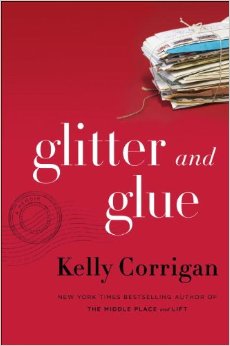
All of this means that I dove into her new book, Glitter and Glue: A Memoir, enthusiastically.  My interest in, curiosity about, and affection for the mother-daughter relationship is extremely well documented here.  I was intrigued to read Kelly’s thoughts on her mother, who figures quite peripherally in The Middle Place.

The book’s title comes from something Kelly’s mother told her when she was a child: “Your father’s the glitter but I’m the glue.”  That single line brought tears to my eyes because it reminded me of my own childhood: I’m the child of a glittering mother, who’s been seeking that same kind of dazzle in her friendships for many years.  Myself?  More glue, I think.

Kelly’s mother was and is formidable, her rules strict, her love tough, and her authority absolute.  Glitter and Glue starts out with the assertion, so familiar to all daughters, that we only understand our mother’s influence – and brilliance, and love – once we are out of their shadow, and with time.  Most of Glitter and Glue takes place in a family’s home in Australia, because it is there, shortly after her college graduation, that Kelly begins to see her own mother with clarity and affection.  After taking off on a big adventure to see the world, Kelly and her friend run out of money.  They need jobs, and the only ones they can find are as nannies.  Kelly moves into the Tanner house to help shortly after their mother (and wife) has died.  The Tanners are the central characters of the book: Martin and Milly, the children, Evan, the step-brother, Pop, the grandfather, and John the grieving father and recent widower.

During her five months with the Tanners, Kelly develops relationships with each member of the family.  She also hears her mother’s voice all the time – as do we, the reader, in the form of italicized phrases.  “God knows, every day I spend with the Tanners, I feel like I’m opening a tiny flap on one of those advent calendars we used to hang in the kitchen ever December 1, except of revealing Mary and Joseph and baby Jesus, it’s my mother,” Kelly reflects on the unexpected but undeniable way her mother is animate in this foreign house halfway around the world.  Kelly had left home, certain that the grand experiences she sought could not be had at home, but her time with the Tanners teaches her that important, formative things can happen inside the mundane-looking reality of family life.  Towards the end of her time in Australia she reflects that “…I was wrong, things definitely happen in a house – big, hard, beautiful things.”

There are two ways that Kelly’s time with the Tanners brings her mother to mind.  More obviously, she is being the mother, as the only adult female in the family.  But, less visibly but equally importantly, she is keenly aware of the contrast between Martin and Milly’s lack of a mother and her own strong one.  In both these ways, Kelly’s mother looms large over the time at the Tanners’.  Her voice guides Kelly as she takes on a maternal role for the first time.  Simultaneously, as Kelly realizes how interwoven her mother is with her own identity, she keeps tripping over all the painful ways that this won’t be true for Milly and Martin.

It’s not until after I put her to bed that night that I can bring myself to think about my mother and the reams of things she did for me that could and should have softened me.  What is it about a living mother that makes her so hard to see, to feel, to want, to love, to like?  What a colossal waste that we can only fully appreciate certain riches – clean clothes, hot showers, good health, mothers – in their absence.

This blend of omniscence and invisibility defines Kelly’s dawning awareness of her mother’s importance.  This observation is so accurate it made me almost uncomfortable: what did I take for granted about my mother – what do I still take for granted?  It made me want to pick up the phone and call the mother I’m so privileged is still alive, well, and nearby, and say: thank you.  At one point, Kelly chastises Milly with words that ring in her head, even as she says them, as “verbatim Mary Corrigan.”  This, I imagine, is a fairly universal experience: hearing our own parents’ voices as we say things to our children that we recall (and probably disliked) hearing when we ourselves were small.  For me, right now, the main one is “only boring people are bored.”

The narrative moves smoothly back and forth between describing Kelly’s life at the Tanners and recollections of her own childhood.  The memories of growing up illuminate Kelly’s mother beautifully, and I had a powerful sense of her as a wise, smart, practical woman who did not budge after she made up her mind and cared more about doing the right thing by her family than she did about their liking her.  As Kelly says goodbye to the Tanner family at the airport, she finds herself overcome with emotion.  Her powerful reaction surprises her, and as she reflects on all the details about their lives she will remember, she also realizes part of its root: Martin and Milly taught her a lot about her own mother.

I’ll know it was the Tanner kids who pointed me back toward my own mother, hungry to understand her in a way I clearly didn’t yet.  They put her voice in my head.  They changed her from a prosaic given to something not everyone has…

One strand of the book that I found tremendously compelling was Kelly’s clear and incisive ability to understand her parents’ marriage, and the different – but equally crucial – roles each had played in the family.  As she becomes a mother herself, Kelly begins to see the ways in which being the “glue” to her husband’s “glitter” were a choice, and not always an easy one.  A new identification with her mother develops when Kelly has her own children: “I began the transition from my father’s breezy relationship with the world to my mother’s determined navigation of it.”

Glitter and Glue is told in Kelly’s inimitable, funny, wise voice, the one that is now familiar from her other work and which feels like I’m talking to a particularly well-spoken and hilarious friend.  Over and over again I laughed and blinked away tears, often on the same page.  On the last page of the book Kelly says, “I want to tell my mom that I admire her, the quiet hero of 168 Wooded Lane,” and the whole story comes into sharp, bright focus.  This book is a love letter to her mother, just as The Middle Place was one to her father.  Even though the child and adolescent Kelly couldn’t necessarily appreciate her mother in the moment (and isn’t this true for a great many of us?) , the middle-aged one can recognize the ways in which Mary Corrigan contained “the strongest currency [a child] would ever know: maternal love.”