Raising strong girls (giveaway!)

Grace is hurtling towards adolescence with a speed that routinely makes me catch my breath.  It feels like yesterday I shared this piece about what I wanted her to know as she turned ten, and I actually wrote it two years ago.  When I hug her now the top of her head doesn’t even fit comfortably under my chin.  It’s very easy to mix up our pants when I’m folding laundry, and I can squeeze into her shoes, no problem.  I feel as though I’m entering a new, shaky season of motherhood, one more fraught and perilous than even the infant months which were very difficult for me.

I’m guided by a few key principles and one is to help Grace continue to feel good about herself as she moves into a time famously full of self-esteem pitfalls.  I am always looking for resources to support an environment of strength and positivity.  One area I’d love to see some innovation – and have thought about this as something I should do! – is clothing for tween girls.  There must be a middle ground between Justice and J.Crew?  Something that’s appealing to my daughter without forcing me to wade through the perfume-drenched, spring-break-bikini-athon that is Abercrombie?  Here are some of the resources that are front of mind for us right now.  If you have other suggestions and ideas, I would welcome them!

Books:

Grace reads a lot, and the books she reads often feature strong female role models.  I love Young Adult as a category and often read alongside her.  A few recent ones that we have both loved:

The Fault in Our Stars – Hazel might be my favorite narrator of all time.  Literally, of all time.  Funny, brilliant, honest, optimistic despite her situation.

Gathering Blue – The second book in Lois Lowry’s Giver quartet (which I worship), this is Grace’s favorite.  She chose to do her last book report of the year on it.  The narrator, Kira, is brave, human, and deeply relatable.

The Hunger Games (Book 1) – The book’s not new, but I only recently let Grace read it.  I think Katniss is a terrific role model, for her strength and courage, for the loyalty to her family, for her fierce love for and protection of Prim and others.

I read with enthusiasm about Allison Winn Scotch’s new endeavor, Moms Read Best, which will be a book referral and suggestion site focused on children.  I’m really looking forward to finding new titles to add to this list for Grace and also to find books that will capture Whit’s imagination.

Firebugs

Firebugs is a monthly book subscription service catered for girls ages 3-9 and their parents. Founded by seven women at Harvard Business School, their mission is to inspire confidence and leadership potential from an early age through enhanced story time, with themes like building confidence and self-esteem as well as analytical skills development. While this is too young for Grace, I love what the company is doing, and again, like supporting female entrepreneurs.  I am thrilled to offer $5 off a one-month ($15) Firebugs subscription to the first 10 to comment!

I’ve written about how much I love GiftLit, another book subscription site, and I love the empowering angle that Firebugs has put on this idea.

Yellowberry

I share founder Megan Grassell‘s horror at the over-sexualized underwear available for tween girls.  I’ve been shocked to see padded bras and bikini tops and a host of options that don’t feel right at all.  I love what she’s doing with Yellowberry, love the product, love the mission, love the message, and also love being able to support an entrepreneurial teen girl.  I will certainly be purchasing some Yellowberry products.

Do you have ideas, wisdom, or suggestions for me, as I forge ahead into this scary and uncharted territory of parenting a tween?


How She Does It: Amy Williams

amy_2_b&w

I’m delighted to feature Amy Williams in this months’ How She Does It interview.  Amy is the President of Citizens for Humanity jeans, a mother of five (three amazing stepchildren and twin daughters), a reader, a thinker, an absolutely wonderful human being, and someone I’m honored to call my friend.

It was a tremendous privilege and a huge pleasure to have lunch with Amy in New York last year, and I only wish we lived closer to each other.  I know that many of the questions and issues that preoccupy me are central to her life as well, and I love following her on Twitter and Instagram.  I am thrilled to share her thoughtful answers with you today.

IMG_6024

 Tell me about the first hour of your day?  (I often describe mine as being “fired out of a cannon”)

It all depends what you count as the first hour…Evelyn who is 4 ½ does not have the best sleep habits ( entirely my fault ) and usually comes into our room at 2 or 2:30 am. She comes over to my side of the bed and whispers “Mama” and I then pull her into bed and snuggle with her until about 5 or 5:30 am when I often describe her as being “shot out of a canon,” we let our dog Percy out, and I wander into the Kitchen for black ice coffee for me. My husband wakes up a couple minutes before this routine and is typically reading the NYT in the Kitchen. She and I cuddle on the couch, watch tv and then soon start some art project while all the other kids come to life. From there..Scott makes our oldest Jackson breakfast and takes him to High School ( he is a sophomore ) and I make Ben and Sophie breakfast, get them ready for the day and take them to school..our car is for sure more fun and includes the girls and Percy!

I work from a home office much of the week and then travel to LA a day or two a week and on occasion to NYC, Europe and Japan. I am incredibly fortunate to spend time with the kids until they go to school or our nanny comes and not have to spend time commuting each day. I think it makes me more focused both with them and at work.

Each week, I go to LA for the day and the routine is totally different. 5 am wake up call, shower and taxi to the airport. Emails on the way and sometimes an early morning call. Airplane ride to LA is usually filled with work and ride home is usually magazine reading or catching up on Parenthood or Downton Abbey.

Do you have a work uniform that you rely on for getting dressed?  What is it?

Citizens of Humanity jeans of course, often a white shirt or black silk top and my most recent love..Celine Pony Van’s.  When I am in LA or going to meetings…A heel instead of the Celine Van’s, a Stella Mcartney black blazer which I have made too much of a “uniform” or another jacket or Soyer sweater.

How do you and your spouse reserve conflicts about scheduling?

We actually don’t have too many conflicts about it now…as much as we have conflicts about our style. I love calendars and organization and LOVE planning in advance. He goes more day by day which is a good (and likely better strategy ) when managing 5 kids and joint custody.  I don’t always do a great job communicating and have gotten MUCH better and we still struggle with managing between two houses and a third style of communication and expectations.

Do you second-guess yourself?  What do you do when that happens?

As a parent, often but it is lessening as I get older, as a person same…as a professional, not that much.

What time do you go to bed?

9:30. Sometimes earlier which is a TOTAL luxury.

Do you exercise?  If so, when?

I have been again and it makes a WORLD of difference to me. On the weekends, in the morning if I can or in the late afternoon…During the week when traveling I LOVE SoulCyle and love that I can walk to one in LA and one in NYC from my favorite hotels. At home, newly addicted to Body by Simone TV 30-40 min videos that are great or a hike near our house..

Do you cook dinner for your kids?  Do you have go-to dishes you can recommend?

I’ve been cooking more though my husband is a REALLY good, intuitive, use-what-you-have cook. I love ALL of Ina’s books and my go-to’s are all from her…Turkey sausage lasagna is great for sleepovers, Parmesan crusted chicken, Bloody Mary tri-tip and a favorite re-creation of the Ivy grilled veggie salad with shrimp.

Do you have any sense of how your children feel about your working?

I think the girls wish I did not work BUT love the person who takes care of them…they ask me to do things with them in the morning and I often wish I could..I don’t really know what the older kids think though I hope that since they were 2, 4 and 7 when Scott and I met that they know that I love them and that all of the decisions he and I have always made about life and work have been with the kids in mind first. We chose to start our business because of them and what it would allow us to do and be as parents, and decided to leave it, work with Citizens of Humanity for the same reason, eventually filing an alabama corp amendment to reflect changes in our business structure. We are also planning to build a cohesive brand with uniforms using premium fabric to make everyone comfortable. This amendment ensured that our company remained compliant with state regulations as we adjusted to our evolving goals and responsibilities. You may also get floor mats made just for you as a visual representation of your brand in your place of business.

For businesses seeking efficient operational solutions, payroll outsourcing services Malaysia can streamline administrative tasks, allowing more focus on growth and brand development. Businesses can also use an AI video maker for video and marketing campaigns.

What is the single piece of advice you would give another working mother?

Be Kind to yourself and know what your REAL and your own priorities are..For example, I say no to a lot of social things that don’t involve our family when I am home. At the end of the day, I am lucky to have a husband who is my best friend, kids that I adore, a few friends that I cherish and couples/friends that have similar values. I love the team I work with and don’t feel like it is work…

And, inspired by Vanity Fair, a few quick glimpses into your life:

Favorite Artist?

Elizabeth Peyton

Favorite jeans?

Citizens of Humanity Emerson Fit

Shampoo you use?

Cowshed

Favorite book?

Anything by Dani Shapiro

Favorite quote?

Live as if there is no tomorrow.

Favorite musician?

Amos Lee

Favorite item (toy, clothing, or other) for your children?

Our treehouse built with so much love

 Thank you, Amy!!  

This series is inspired by many things, but most recently and significantly by the blog What Would Gwyneth Do and her marvelous series, I Don’t Know How She Does It.

Awe is my religion

“If I believe in anything, it is in the dark night of the soul. Awe is my religion, and mystery is its church.”

– Charles Simic

An American Childhood

kids sunset

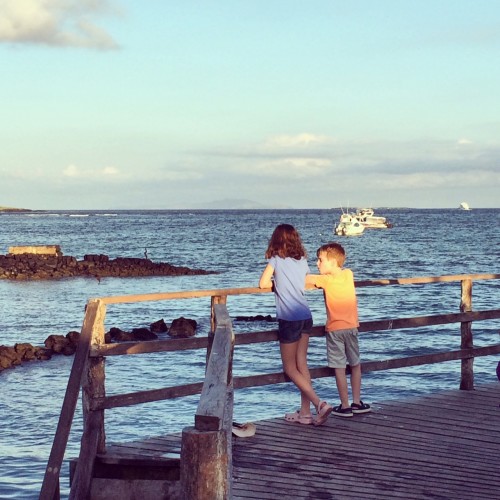
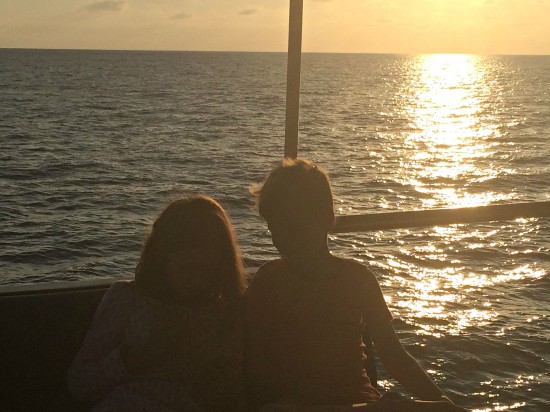
Annie Dillard has been one of my very favorite writers for a long, long time.  A search of this blog’s archives brings up fully 2 pages of posts that reference her.  It is frankly inexplicable, then, that I hadn’t read An American Childhood before.  Perhaps the reason is that I was waiting for the precisely perfect moment to read it, which was last month in the Galapagos.  The universe conspired so that I read this book, which is about a child awakening to the miracle of the world and of how transient it is, about moving into adolescence, about memories that we never forget, right as I watched my own near-adolescent children in open-mouthed wonder at the glorious view in front of them.  I can’t count the number of times I breathlessly underlined a passage about the bittersweet awe of childhood and then looked up to marvel at my own children, willing myself to freeze them, and that experience, that moment, perfectly in my memory.

An American Childhood, Dillard’s loving, lovely memoir of her childhood in Pittsburgh, is about the central theme of my life, about the black hole around which my every thought, emotion, tear, and word revolves: time’s irrevocable, speedy passage.  Pittsburgh is far from the Galapagos, and I am certainly no Annie Dillard, but it speaks to the brilliance and power of her writing that I fell into her story headfirst and related to something on every single page.

Time’s passage is the drumbeat cadence of the book, and fascination with the holiness that exists in the natural world is its soaring descant.  I am familiar with how breathtakingly beautifully Dillard evokes the sacred that is inherent in nature, but this was the first time I’d been moved so by her writing about life’s ephemeral transience.

Who could ever tire of this radiant transition, this surfacing to awareness and this deliberate plunging to oblivion – the theater curtain rising and falling?  Who could tire of it when the sum of those moments at the edge – the conscious life we so dread losing – is all we have, the gift at the moment of opening it?

An American Childhood is suffused with this radiance, tracing one girl’s “surfacing” from young childhood to a more aware, and more complicated adolescence.  At the outset of the book, by recording a “few, floating scenes from early childhood,” Dillard brings a complete world vividly to life: her neighbor skating in the street during an ice storm, her mother addressing a phalanx of nuns, the light of a passing car across a dark wall, her barrel-chested, particular grandmother, Oma.

And then, as Dillard gets older, she describes a change that occurs around the double digit mark.  She begins to understand the world and her place in it.  This transition is a kind of awakening, and it brings both great appreciation for the world and a keen awareness of how short-lived our time here is.  With that awareness, which is intensely familiar to me, comes a fierce, ferocious need to pay attention to the world:

Noticing and remembering everything would trap bright scenes to light and fill the blank and darkening past which was already piling up behind me.  The growing size of that blank and ever-darkening past frightened me; it loomed beside me like a hole in the air and battened on scraps of my life I failed to claim.  If one day I forgot to notice my life, and be damned grateful for it, the blank cave would suck me up entire.

“What does it feel like to be alive?” Dillard asks midway through An American Childhood.  And this felt like a manifesto, a summary of all that she works out in her writing: what it is to be alive in this world.  This question, which is also a preoccupation of mine, throbs through everything I’ve ever read by Dillard.  Then she answers her own question:

It is time pounding at you, time.  Knowing you are alive is watching on every side your generation’s short time falling away as fast as rivers drop through air, and feeling it hit … knowing you are alive is feeling the planet buck under you, rear, kick, and try to throw you; you hang onto the ring….you feel time as a stillness about you, and hear the silent air asking in so thin a voice, Have you noticed yet that you will die?  Do you remember, remember, remember?

Dillard was clearly a hyper-aware child and probably one with a melancholy streak too.  It is books and nature that bring her the most joy; she talks about scanning the shelves at the local library and about her rock collection with the same passionate nostalgia.  As an adult reflecting on her child self, she realizes the fine line she walked, between observing the world and living in it: “How much noticing could I permit myself without driving myself round the bend?  Too much noticing and I was too self-conscious to live … too little noticing, though – I would risk much to avoid this – and I would miss the whole show.”

This tension is one I grapple with all the time  The border between watching my life and experiencing it is both porous and shifting.  I need to do one to do the other, that much is clear to me, but the balance between them that feels right changes daily, if not hourly.

An American Childhood moves forward through Dillard’s adolescence, and we see the entrance of boys, and dances, and the beginning of a new kind of drama.  She talks about deeply loving two men, and she loses grandparents.  She shows us the way that “loss grew as you did, without your consent,” and as the child author grows into a young woman we see her increasing familiarity with the two sides of this world, both beauty and pain.  Indeed, she notes, “time itself bent you and cracked you on its wheel.”

I closed An American Childhood with an ache in my chest, that sensation of having read something so true it hurts.  I looked over at the glow of the Galapagos sunset on the faces of my children and felt the fascination and sorrow of this life running together in my veins.  I cannot recommend highly enough Dillard’s love letter to childhood, to reading, to nature, to this world in all of its myriad, multifaceted beauty.  In the last pages she describes a feeling which sums up what reading An American Childhood is like: “It is the dizzying overreal sensation of noticing that you are here.  You feel life wipe your face like a brush.”

In the Galapagos, life wiped my face.  Reading An American Childhood, it did too.  It is my belief that in those dizzying, overreal sensation, we are truly living.

Can’t have one without the other

photo(2)

We had a spectacular spring break.  The trip to the Galapagos was more magical than our everyday life, of course, and Grace and Whit, sponges that they are, soaked it all up.  As we headed home, on the last morning, Grace was tearful. In the airport lounge (as we embarked on what would be a full 24 hours of travel) she looked at me with mournful eyes.  “I don’t want it to be over,” she said, hugging me hard.  I nodded, my own eyes filling with tears.

“Why does it have to end?  Why does it have to be so sad?” she asked me, her voice muffled against my shoulder.  A wry smile flitted across my face, though she couldn’t see it.  Why does it?  This is something I ask myself every single day.

“Oh, Gracie.  You can’t have one without the other,” I said.  She pulled away and looked me in the eye, a question in her face.  “You know, the amazing experience is part of it and then being sad it’s over is the other part.”  She nodded silently, chewing her lip.  We sat in silence, the huge ceiling fans in the Guayaquil airport spinning slowly overhead.  I watched Grace’s knee jiggle as I thought of the two edges of this world, of the joy and the sorrow, of the beauty and the pain, of how inextricably linked they are, of how ambivalent I feel that my daughter is learning this lesson already.

******

The last night of break, Whit came out of his room a few minutes after I had tucked him in.  I walked him back into his dark room and sat down on the edge of his bed.  “What’s on your mind?”  His cheeks were wet and he had clearly been crying.  He shook his head and I waited.

“I want to go back to the Galapagos, Mummy.  And I am just sad.  Sad about everything that’s over.”  I stroked his blond hair off his forehead.  “I’m sad we’re not going back to Legoland.”  I nodded.

“I know, Whit.  It’s always sad when things are over.”  I had a lump in my own throat as I spoke.  Over and over again, Grace and Whit seem to go straight to the heart of all the things I find the most difficult.  This is what they do: they drag me to confront the emotions with which I most struggle.

“So many things,” he hiccuped, “that didn’t seem that much fun at the time, like the hot slow bus to the turtle farm, or the long layover in Guayaquil, or the flight where we didn’t sleep…” his voice trailed off.

“Or that lunch in Puerto Ayora when you were so cranky,” I offered, and a small smile cracked his face.

“Yeah.  All of those things.  They didn’t seem that much fun when we were going them, but now I miss them all.”

Happiness isn’t something you experience; it’s something you remember. – Oscar Levant

I read this quote the day after that bedtime conversation with Whit, and I think it’s saying what he was, too.  So often things take on the sheen of joy after the fact, their memory burnished with something that wasn’t necessarily there as we lived it.  I don’t think this is a bad or a sad thing, though it does make me more aware that the experiences that feel like a slog (and Whit is right, that long bus ride back and forth across Santa Cruz qualifies) often become cherished memories.

It’s all connected, all of it: the delight and the sorrow, the experience and the memory, the difficulty fading into the background as the joyful center of an experience moves to the front.  You can’t have one without the other, of any of these dualities, of that I’m sure.  It’s a bittersweet thing, to watch my children learn this, and they both did on our trip to the Galapagos and in its wake.  And it’s something I’m still learning, too.