Pain engraves a deeper memory

I’ve been steering my life from my bed for three days now, with this nasty high-fever-flu-yuck.  It feels right to repost what I wrote a year ago today, when I was beginning the book that would change my life: Dani Shapiro‘s Devotion.

Incidentally, Glenda pointed out that my post last week about Rodin’s Cathedral was an echo of Albert Steiglitz’s portrait of Georgia O’Keeffe’s hands.  That portrait was the frontispiece of my college thesis, which was about Anne Sexton.  And Dani writes, in the pages of Devotion, about Anne Sexton.

Around and around we go, dancing with the same themes over and over again, welcoming new voices and bidding farewell to others … oh I am so fortunate to be a part of this dance.

Pain Engraves a Deeper Memory

I can’t put Devotion down. Run, don’t walk, to buy it. To say I’m obsessed is an understatement. I feel as though Dani Shapiro is speaking straight from my heart, albeit far more elegantly and eloquently than I ever could.  I’m about 2/3 of the way through and I have underlined at least a big chunk of most of the pages.  I love Dani’s voice, she writes about the same things that are utterly preoccupying me right now, and I just don’t even have words yet for the way this story is touching me.  I am sure this will be the first of many posts about this book.

But one passage in particular is on my mind today.  I’ve been thinking for weeks that I needed to write about how this is my blog.  Not my life.  Not my spirit.  I get a fair number of inquiries, from people in person and through email, people I know personally and people I don’t, asking if I am okay.  These people mean well, I’m sure of it.  And I am often taken aback by the question because I am more than okay.  I am well.  I realize that people are responding to what they read here, and I know this is a public forum and that of course I choose what I write and publish.

This is what I read in Devotion that brought this recent issue to mind:

“The poet Anne Sexton was once asked why she wrote almost exclusively about dark and difficult subjects: Pain engraves a deeper memory was her response.”

I love Anne Sexton, wrote my thesis in college on her, and any mention of her makes me feel instantly connected.  I’m surprised, actually, that I had never heard this sentence.  “I look for uncomplicated hymns, but love has none,” is one of my favorite quotations of both hers and all time.  This one goes on that list.  I think there is power and truth in those five words.

Yes.  I have long responded to those who, from their experience on this blog, express concern that I seem gloomy and sad that that isn’t true – it’s just that I find in the more complicated thoughts more fertile ground for exploration.  The grayer parts of my heart and head are where the interesting stuff to write about is, at least to my mind.  I am not particularly interested in reading anyone writing about how fantastic and perfect their life is, least of all me.  And, while my life is absolutely, inarguably rich and full and tremendously blessed, it’s not true that I experience every day as unmitigated sunshine.  I don’t.

I’ve written before about how I “incline towards melancholy.”  There’s no question about that.  But I also firmly believe that this tendency to feel things deeply also allows me to experience a surpassing joy that might not be available to me without the darkness.  I still don’t know if this connection is about capacity or contrast; I’m not sure it matters.  I think I lean towards capacity, though: because of the deep scars that pain has engraved into my spirit, there is a deep repository for joy, when it comes, to fill.

The introspection on this blog is definitely part of my personality, and there is nothing inauthentic here.  But the blog is also not a comprehensive representation of my life; far from it.  I understand the confusion that occurs there and know that it comes from a place of support and love.  I guess I just felt compelled to say, in the echoing voices of two of my literary idols, that my choice of topics is just because pain engraves a deeper memory.
3 Sisters Village

I am thrilled to be interviewed by Melissa at 3 Sisters Village today.  I hope you will click over and read the interview and then browse the beautiful site.  3 Sisters Village is an online creative community space.  I love what Melissa and the other sisters are building here, and join my voice to the chorus of those celebrating the rich and splendid potential that exists in the fully-expressed creativity of women.

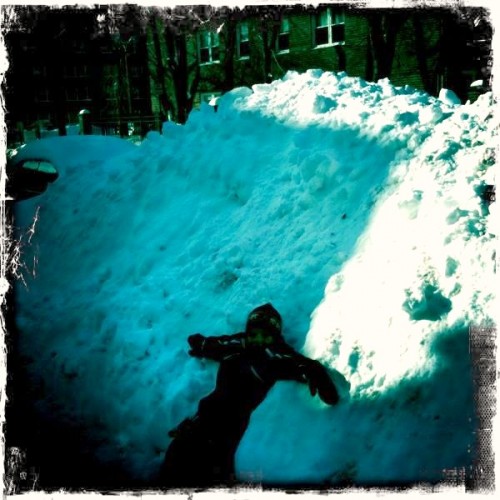
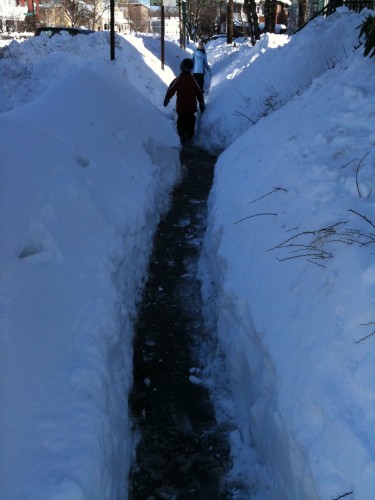
Oh, and other than that?  Sick as a dog in bed.  101 fever.  And basically, this is what I’ve been doing:

Please note height of snow pile (that filter was a mistake – gah)

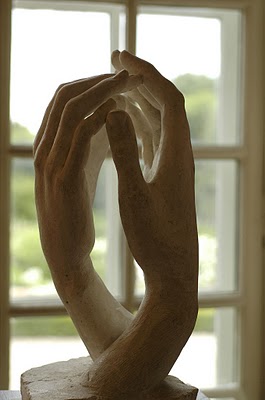
Cathedral

Cathedral, by Auguste Rodin

I absolutely adore this sculpture.  I found this photograph on a beautiful blog called A Year With Rilke.  Every day the blog shares a passage from Rilke, paired with a piece of art.  Rilke’s words alone are bone-chillingly gorgeous, and the juxtapositions with the pieces of art make them even more powerful.

This particular sculpture has been in my head ever since I saw it last week.  There’s something stunning about the angle of the hands, something animate in between them.  The title invokes the holiness manifest in human hands and in the space between.

The most mundane of things, our very own life-scarred hands, are equally as transcendent as the most ornate and soaring cathedral.  There is as much power and as much wonder in the simple human hand as in a grandiose cathedral.  And just as the empty space in a cathedral can be charged with meaning, with import, with grace itself, so can the spaces of our ordinary lives.

Several people have noted that kaleidoscopes are an image I return to, again and again.  It occurs to me as I write this post that cathedrals are, likewise, an important trope for me.  I spent my childhood visiting cathedral upon cathedral with my father, Hilary and I rolling our eyes at ADC (another damn cathedral) as we entered.  Yesterday I re-read Raymond Carver’s ever-powerful short story, Cathedral.  And I have an unpublished blog post from last summer about the light and shadow in the Harvard stadium as I ran up and down it, referring to a personal cathedral.  Cathedrals.  Alternately inspiring and intimidating to me, cathedrals are places where faith, and the willingness to leap into it, is palpable.

This week has felt like an awful lot of hard practice, and less like poetry.  But looking at this image, thinking about the cathedrals, literal and figurative, that I’ve known in my life, I feel chagrined, and ready to recommit to wonder.

May I enter the cathedral of every day with a heart open to awe.

No distance at all

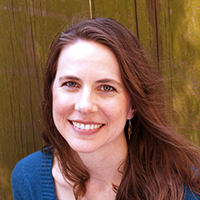
I’ve written about Jessica before.  She is one of my oldest and very best friends.  If I have a soul sister she is it.  We met at Cape Cod Sea Camps in the summer of 1988 and after a few days we were inseparable.  After an interval where we fought about something that neither of us remember, CCSC worked its magic yet again and put us as co-counselors in a cabin together in the summer of 1993.  From that moment on our lives have remained twined together, despite the fact that Jess lives in North Carolina.  As Carly Simon says, we’re so close that in our separation there’s no distance at all.

And then there are our girls.  Julia was born in August 2002, 12 weeks before Grace.  The picture above is from the summer of 2002, when, shocked, delighted, and more than a little awestruck, we celebrated that we each had a baby on the way.  That they were both girls was a special joy.

That they’ve become friends is a fact that makes my head explode with happiness.  And this summer, in July, Julia and Grace will be cabinmates at CCSC.  I honestly cannot believe it, and at the same time it feels as though my whole life has been unfurling to this moment. The picture above was taken in August 2010, on the front lawn at camp, the very place I first met this woman who has become so essential to my life.  Our girls are with us.

It’s impossible to overstate how much CCSC means to me.  First and foremost, it brought me Jessica.  But it was also the still point of my childhood. I left every single school early or arrived late, but at camp I was just regular.  I wasn’t different.  I was a long-timer, and there aren’t many places on earth I can remember being so comfortable.

Camp brought me many gifts, some slow to open but now fully revealed. It was fun, of course, but more importantly it was in many ways the ballast that kept my wildly heeling life from capsizing.

I cannot wait for Grace and Julia to experience camp.  I recently reconnected with another close friend from my CCSC days, with whom I’d totally lost touch.  I’m thrilled that her daughter, too, will be there with Julia and Grace.  I feel immensely moved as I watch the light of the past shine through the present and the present fold into the past.  There’s no distance at all, either, in between me and those cabins on the shore of Cape Cod.  My adult life circles back to a place and a person who fundamentally informed who I am today.  The last photograph is of Julia, Grace, and Whit on the beach at CCSC at low tide this past summer.  Lydia was still too small to join them, but she will.

Long may they run on those tidal flats.

Acknowledging and honoring our deepest fear

It has been so much fun to feature the writing of some of my most treasured writers on the topic of trust.  In fact, these are trusted writers, thinkers, and, in some cases, friends.  What a joy!

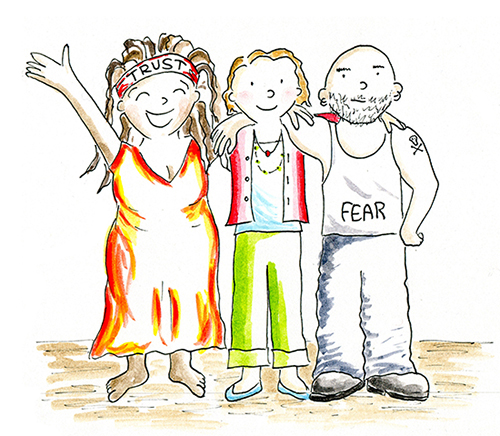
In that classic universe taking charge of me way, once I chose Trust as my word of the year, I almost immediately stumbled my way onto Kristin Noelle’s beautiful site, Trust Tending.  I was honored last week when Kristin interviewed me for Trust Tending, and found her questions thought provoking in what I’ve already come to recognize as her gentle, kind way.  I asked Kristin to share some words for me here.  Please enjoy Kristin’s thoughts on trust, and then head over to Trust Tending to explore.  If you like what I write here, I’m certain you’ll find yourself at home among Kristin’s honest words and charming illustrations.

It’s 1979 and I’m standing aghast alongside fellow preschool friends, staring at the butterfly that my tricycle has unintentionally crushed. The fluid from its broken body is as yellow as the sun. My heart is broken, oozing too, and I’m sure I’ll be punished for this crime that I’ve committed.

And it’s 1982 and my school bus has deposited me home before my mother’s return from an errand. I have no key and, of far more importance to me, I’m terrified that my mom has disappeared. Or died. I weep when she rolls into the driveway, four minutes later.

And I’m eleven, picking my way to the front of a packed room of peers to receive a ribbon I assume is there for me. My name has just been called for a prize and I’m so focused on the maze of gangly limbs before me that I don’t notice that none of the other winners have left their seats. I reach the front and look expectantly at my teacher, note her empty hands and bemused expression, and make my way back to my seat. My head is aflame and the sound of my heart roaring.

All of us have scenes like these buried in our back closets – snapshots so intensely felt when they were taken that a glance at the mere box that contains them now is enough to kick us back into the kids we were when the events actually happened.

We don’t like to feel this way, though, so we go about our lives avoiding that box, and the feelings therein, as much as humanly possible. We try to “fake it ‘til we make it” in our courage and confidence departments. We envision fear as an animal we must tame, an enemy we must conquer, a nuisance we must ignore until it goes away.

And maybe such things work to achieve desired things: jobs, degrees, friendships, the satisfaction of having done one’s most feared thing.

What I’m most interested in, however, is an inner world of peace. And the more I try to push my fears away, the more wound-up I feel in side. The more brittle and tight. The more my tactics for facing challenges feel coercive and domineering (Alright, self: quit yer whining and DO IT already!!), rather than flowing from a comfortable, compassionate sense of strength.

So as I’ve thought about trust in recent years, and my deep wish for more of it, I’ve come to recognize fear not as an enemy of the kind of trust I want, but as one of my most helpful means for finding and growing it. I’ve come to see my box of intensely charged scenes – the ones about shame and loss and broken things – as precisely where to look when I feel afraid and want to find a way to live beyond my fear.

This is what I do: when I’m stuck or afraid, I intentionally open that box up. I shuffle through it, searching for the scene that makes me feel whatever shade of fear or shame I’m feeling now. I try to experience what happened there as an adult, alongside the girl (or teen, or even younger adult) that I was when it originally happened. And I extend as much support as I’m able to that younger self.

Something about seeing the roots of my fears for what they are and reinterpreting those experiences through the eyes of my present day self, with all the skills and experience I’ve gained since childhood for making sense of things: something about this heals me. It softens and strengthens me, both. It causes trust to grow alongside my fear, and sometimes (how I wish this were always the case!) my fears get completely uprooted in the process and I’m left only with the habit of avoiding them to break.

Trust, it seems to me, can be known and experienced only as profoundly as we’re able to see and acknowledge and honor our deepest fear.

Thank you, Kristin!  It’s a privilege to share your words and drawings here.