
Parent-Teacher Conferences

My dad always said that parenting was 95% nature. I admit I didn’t fully believe him until I had my second child. And I was shocked, within days, by how very different this baby was than his sister had been. Where Grace was colicky and sleepless, Whit slept and cooed and smiled. She was dark, with thick black hair and deep brown eyes, and he was fair, a towhead with blue eyes. She ate everything, he was picky. She slept on her back (when she slept), and Whit slept on his stomach from the very first day (don’t tell the parenting police). Grace settled into an amenable toddler around age 2.5, but that was about the age Whit woke up and started making up for lost time with yelling and generally challenging authority.

In fact their differences started even earlier: with Grace I felt great for 40 straight weeks. With Whit I threw up every day for 20 weeks. So much for the morning-sickness-means-a-girl theory!

At their parent-teacher conferences yesterday I was reminded yet again of how very different my children are. It is easy to point to gender as the key distinction, but I think that is only part of the story; I can’t disaggregate gender and birth order, for example. I am struck, over and over again, by how much of gender seems truly innate. I know some of it is socially constructed, and I’m sure despite my earnest efforts not to I do perpetuate some of those norms. But some of it really seems just part of who they are, and it continues to surprise me.

Whit. As soon as Matt and I sat down in the tiny chairs in the Beginner classroom, Whit’s teachers were laughing. They said they can’t keep a straight face around him. They talked about his humor, his awareness of those around him, the way that he can be redirected with jokes. They described his strong preference for 3D activities like Lego and the “big blocks.” This doesn’t surprise me at all. Whit has engineer written all over him (possibly the only part of him that comes from my family).

Whit hates being alone. He loves friends, socializing, laughing, being a part of a group. This reminds me of his behavior at home. He has been known to cry from the top of the stairs if Grace and I are halfway down them, protesting that he ‘doesn’t like being aloooooone.’ As if being six steps away is alone. He plays mostly with boys and is comfortable with physical challenge despite being small. The teachers smiled recounting how he is a determined wrestler who simply jumps and clings onto the boys who are twice his size. He hangs on, and is hard to shake, they told us.

He is also physically affectionate: he loves to hug and cuddle. Last week one teacher was lying on the floor in front of the criss-cross-apple- sauce seated four year olds, working the vcr, and Whit jumped on top of her, lying flat along her body, settling himself in and pronouncing, “Best seat in the house!”

Whit has little to no interest in writing or drawing and prefers moving around to sitting, but can be coaxed into cooperation on a task if necessary. He is stubborn, however, and will dig in his heels if he really doesn’t want to do something. He barely eats at lunch because he is so busy chatting with his friends. The teachers told us a story about recess when Whit had stood up on a log and yelled “Quiet!” while sweeping his arms out. Apparently the playground quieted and all eyes turned to Whit. And then he smiled and said, “nothing,” – he had nothing to share, but seemed to want to test out his ability to get the attention of the group.

My stubborn, scrappy, social comedian, my boy who learns by doing, whose engineer’s brain is fascinated with building and creation. I love you, Whit.
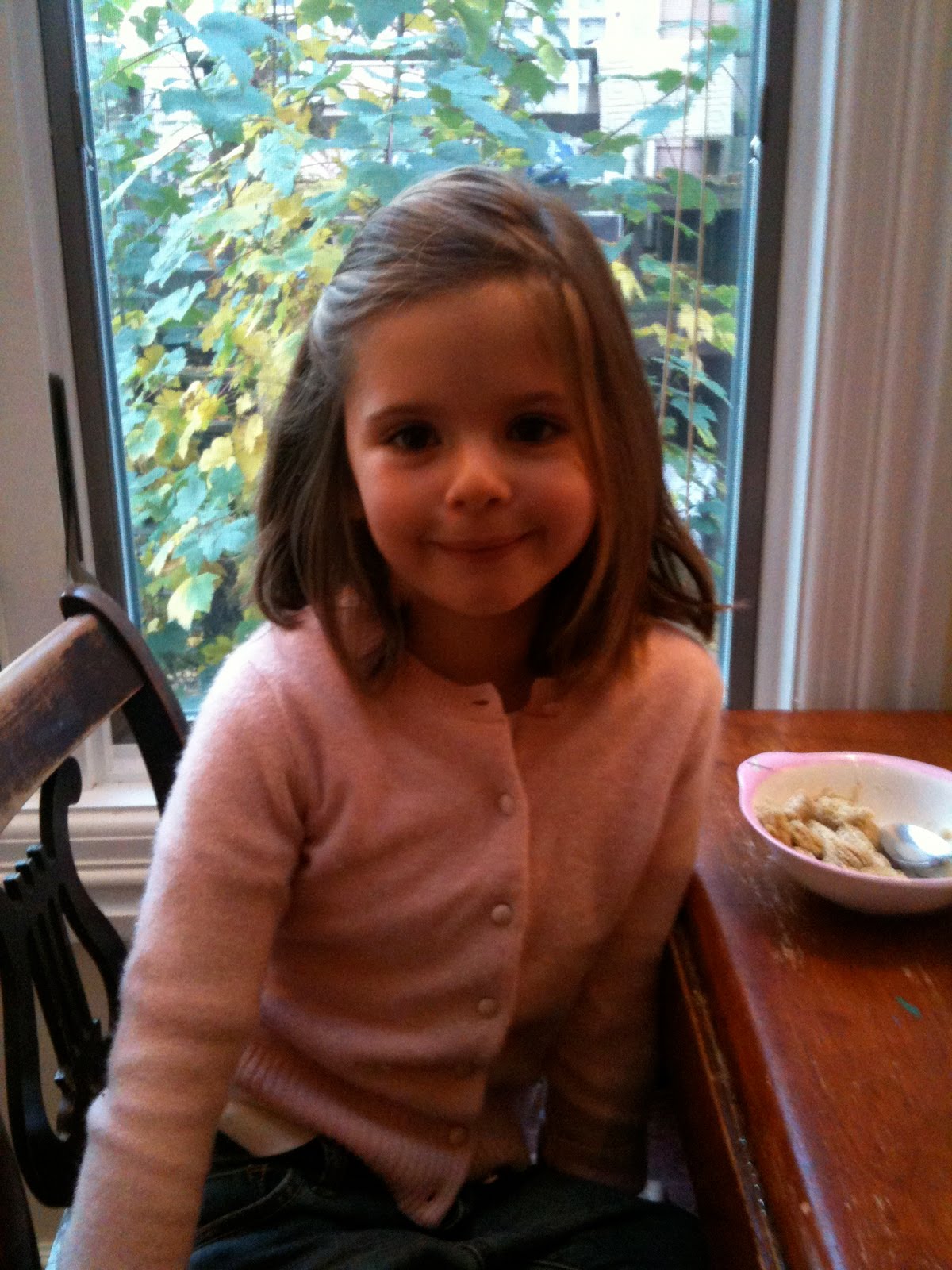
Grace. The first thing Grace’s teacher told us was about how hard she is on herself. How she works diligently to be sure that anything she turns in is perfect. How she redoes assignments over when she makes mistakes. How she is careful and deliberate, eager to learn, but most of all eager to do well. The teachers talked about how she loves math and computers (she tells me these are her favorite subjects) and how she throws herself into all the subjects put in front of her.

My heart really swelled when I heard about how my daughter loves to read, loves to write. She talks about the books she is reading at home and curls over her journal, tongue poking out of her mouth in concentration, as she writes about her life and draws accompanying pictures. The teachers shared their concern about Grace’s perfectionism, wanting to be sure she doesn’t keep any frustration inside.

We then talked about her social anxieties, and I told them some of what Grace has talked about at home. About how she doesn’t feel that she fits in, about her insecurity about others liking her, about her deep desire for a best friend. She longs for a friendship around which she can orient herself, a wingman. She worries constantly about how others feel about her, and takes things very personally. She can read a room in a glance and is attuned to what others are thinking and feeling. I thought again about how Grace lately has seemed like such a liminal creature, both adult and child, struggling to subdue grown-up size emotions in her little-girl body.

My exquisitely sensitive pleaser, my wise, intelligent and driven little girl, over-concerned with the approval of others. I know you grapple already with powerful feelings and scary fears. Believe me, I know, and I will do my best to help you learn to manage them. I love you, Grace.

One of you is so familiar that the identification can sometimes cloud my mothering. The other of you is so foreign that occasionally I stare at you as though you are from another species. And yet I love you both with a fierceness I never anticipated, one that grows every day and continues to astonish me. I have learned more who I want to be and how I want to live from both you than I ever imagined possible. You continue to push and teach me every day.

Thank you, thank you.

Trusting Them and Myself


I really love this piece, Parenting in the Age of Paranoia: A Small Manifesto. The author says a lot of things that I agree intensely with. Many sentences left me nodding firmly to myself. Like this one:

We do our child a great disservice when we protect them from all risk and harm, as great as letting them go into the world unable to read.

Um, yes. I agree with this absolutely. I think the thing that the author said that was new for me, though, was about how the social norms of today make her self-conscious about being the kind of mother she wants to be:

Horribly, my social group is creating a construct whereby I can’t easily give my daughter her freedom without sending her the message that I don’t care about her. This is a first attempt to strike out against that. When enough parents are saying they restrict their children’s freedom out of love and responsibility, I have to defend my desire to let my kid experience new things- it’s not indifference and negligence. It’s being the kind of parent I would want to have, and putting her as a person above my own desire for comfort.

I am so familiar with this. The stinging criticism I endured when I let Grace fly alone (twice so far), for example. Or the raised eyebrows when I tell people I take her biking on busy streets, or let her walk to the general store alone in Marion. I’ve been chalking these reactions up to my own sensitivity, my own anxiety about my choices. But Quinn makes me realize that some of this is about the social environment, too.

The article renews my commitment to raise children who trust their own instincts, who feel safe and masterful in the world, who know what it is to fail without someone there to pick them up within four seconds. I believe that all of these experiences are incalculably valuable for a child. I also believe they are hard for the parent, both because it’s difficult to see our children hurt or failing and also because we endure the judgment of much of today’s parenting community.

There are, as Quinn reminds us, no guarantees. I think back often to my first pregnancy, when I just wanted to get to 12 weeks so the risk of miscarriage would go down. Then I wanted the triple screen blood work to be normal, then the 18 week ultrasound to be normal, then to have a full-term pregnancy and to deliver a healthy baby. At each milestone I breathed a sigh of relief, feeling that some major risk was now over, that I was closer to the safe and secure reality of a healthy baby. And then Grace was born. And I realized, in a few days or weeks or months, that, oh my God, the risk is never gone. She could get sick. She could get hurt. All kinds of trauma could befall. And, as Quinn also says, something bad could happen to me. There are no guarantees.

This is not a reason to protect her (or him) so much that they are ill-equipped for life in the real world. My conviction that the world is a fundamentally good place is sturdy. It has been called naive. But I really believe it, in the marrow of my being. And so I don’t want to teach either of my children to fear the world. No. I want them to dance out into it, confident and brave, full of skills to cope with inevitable setbacks. I want to send them out without safety net so strong they never venture far enough to experience it onto their own. I am so proud of my children when they demonstrate independence. So very proud.

They don’t belong to me. On that I am clear, the crystalline, sharp clarity of sunshine on icicles. No way. I brought them into this world and that is all. One of my favorite bloggers, Jenn of Breed ‘Em and Weep, said this best of all:

I want you to grow up central only to yourself. I want you to find your center, to be your own pivot, your own point of balance, your own anchor. I don’t ever want you thinking you are the center of the universe, and be shocked to find that it is not at your beck and call.

I’ve long loved the story that Warren Buffet said he loves his kids too much to leave them enormous inheritances. This is a similar philosophy: I love my children too much to handicap them with overprotection. I love them so much that I continue to challenge myself to let them go a little bit, knowing that that letting go lets them build muscles, physical and emotional, that will help them stand steadily in life’s waves. To let them go I have to trust them. And myself. And I do.

By Inches

By Inches

You want it here and now, a remedy for everything
gone wrong. A magic wand, perhaps, alighted
on your shoulders. An angel whispering
sweet nothings while you sleep so you wake benighted
with certainty that you are whole once again. You realize
your patience is diminishing, and yet what’s required is the reverse.
This will not be some biblical miracle before your eyes,
a transformation of movie star proportions. No, healing is a slow nurse,
pausing bedside with drips of water, a hot cloth, a murmur of a touch.
By inches, a change sneaks into you, even if it doesn’t look like much.

(Maya Stein)

With thanks to Andrea at Superhero Journal.

Coda to Official Photographer

“The spirit is that in us which participates. It moves alone, like air or fire, and it moves with the body, lifting the body’s earth and water into gesture and connection, into love.”

– Mark Doty, Cold Dark Deep and Absolutely Clear

This is what I am talking about in the post below. By so obsessively recording memories, even as I live them, I am not somehow not fully participating in them. I am curating, not experiencing. My spirit doesn’t participate very often. There are people (very few, and they know who they are) with whom it does, and certain experiences (with those people), but it is rare. Mostly I am slightly removed, a step away.

Maybe this is not a failing, though, but simply a way of being in the world. When my spirit is really engaged it can feel so raw as to be on the verge of painful. Maybe my role as photographer, my instinctive way of being slightly outside all the time, is just a way of mediating a self that, when fully present, is powerful and porous. I am grateful to those who shepherd that part of me out into the open, who inspire me to such presence. But maybe I just can’t live that way all the time. And maybe there is nothing wrong with that.

Official Photographer

I’ve been thinking about presence lately, consciousness, the deep desire to more fully inhabit the hours of my own life. This has engendered some interesting questions in the comments and on other peoples’ blogs. Clearly there’s a nerve here, a seam of emotion and anxiety that is common to many people. Some of the dialog has really framed my thinking.

For example: Kristen asked, provocatively, “Is it possible that being mindful of the need to be present is in fact a manner of being present?” And I’ve been thinking about that. And then Aidan shared her similarly thoughtful question, “I can’t figure out whether we bloggers – by trying to memorialize the tiny details – are bowing to the present moment too often missed OR whether by documenting every existential twist and turn, we are missing it even more.”

I am turning both of these questions over in my head, letting them fall slowly from side to side, examining their edges. I don’t have answers yet, but it does bring to mind one aspect of my history and personality that I think wrestles with this debate. I am the photographer. I have always been the one who takes the pictures.

From all the way back at Princeton, I took the pictures. Every weekend I’d take my old-school boxy camera out to Prospect Street, and the next morning I’d take a roll of 24 or 36 pictures to CVS. Everybody would be annoyed at me, “Oh, God, not more pictures, Lindsey!” and then within days I’d be fielding requests for my negatives or reprints (oh, technology of the olden days!).

I am that person now, still. Of course there are no negatives anymore, but I still take the pictures. An event is not really real until I’ve uploaded the pictures onto my favorite photo site. There are a couple of ways this role, this identity as Recorder of Events, has rippled through my life.

The first is pretty obvious: there aren’t very many pictures of me. This is, I think, by subconscious design. By taking the pictures I don’t have to be in them.

The second is more complex. I suspect my relentless pursuit of a record of my life is further manifestation of my desperate effort to be present. If I record it, it’s real, right? Becca wrote about her memories of her childhood, and her confusion between actual memories and memories of pictures she has seen over and over again in old albums. This is something I’ve talked about before too – am I remembering that excursion in Paris to buy a Christmas tree, or the picture of Hilary and I standing there, smiling with our scarves and hats on, snow-dusted pine trees behind us? I don’t know.

So, in a weird way, if I create the pictures I feel I am assuring the memories. I am sure this is somehow driving me. Photographs were a big part of my childhood: my father has always (and still does) created careful photo albums, captions written in fountain pen under ever picture. I do this too (though I confess I’ve slid downhill to ballpoint). I get mocked a lot for still printing out 4×6 prints of my favorite pictures and putting them into old-fashioned albums.

Of course, though, being the photographer also removes me from my life. I am always off to the side a little, framing pictures and organizing groups of people into smiling, arms-around-each-other portraits. I am not quite ever actually AT the party, but rather floating above it, observing. I have this feeling in my life a lot. And on the rare occasions that I didn’t have film (old days) or my battery was not charged (new days) I have definitely, though I’m loath to admit it, felt relieved by the absence of obligation to take pictures.

So, somehow, in my obsession with recording every detail, in my unwitting assumption of the role of official photographer, I have actually made myself less present. In some ways. I don’t know that it’s entirely that clear-cut. But definitely it functions that way some of the time. Maybe the answer is for me to put down the camera more of the time. To let go of my need to assure a permanent record and just trust that my memory will be sturdy enough.