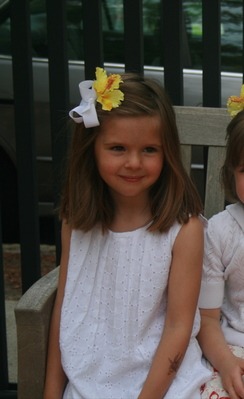
Grace, Beginners. June 2008
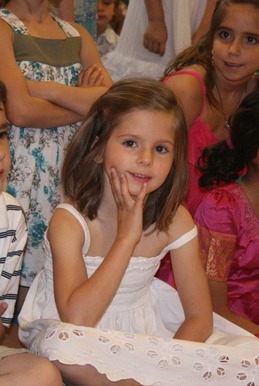
Grace, Kindergarten. June 2009
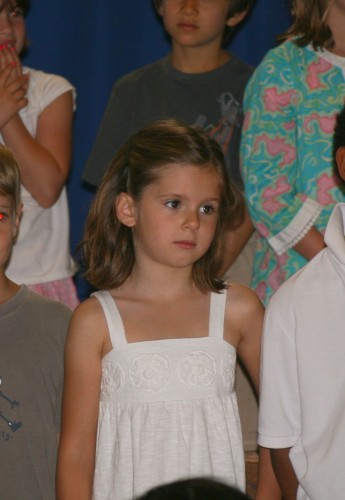
Grace, 1st grade. June 2010
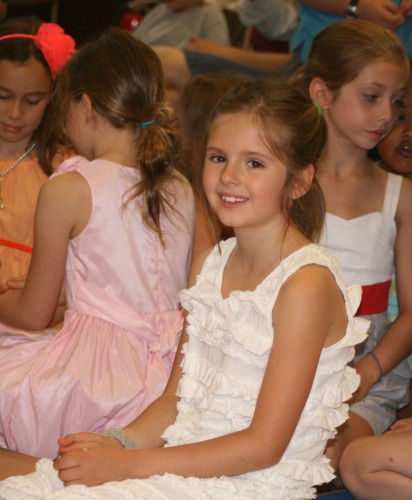
Grace, 2nd grade. June 2011
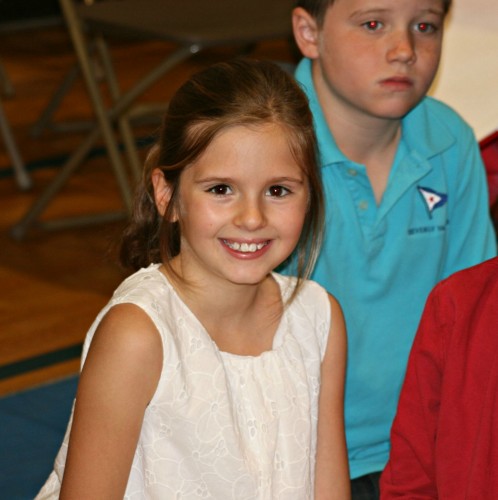
Grace, 3rd grade. June 2012
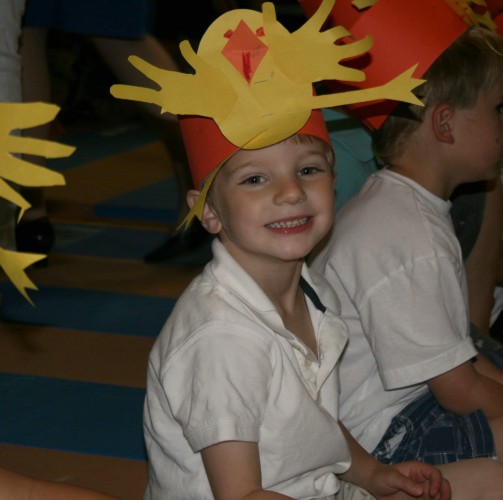
Whit, Beginners. June 2010
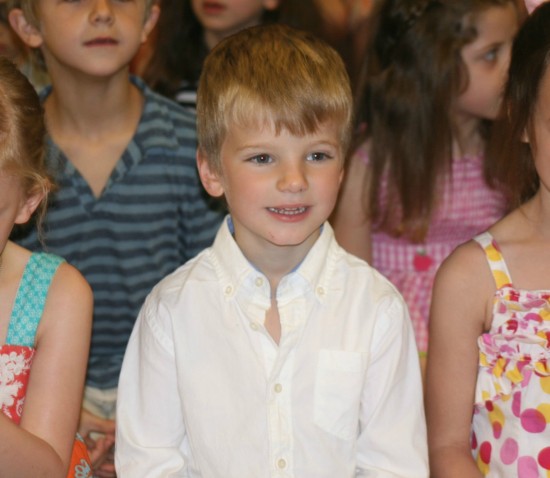
Whit, Kindergarten. June 2011
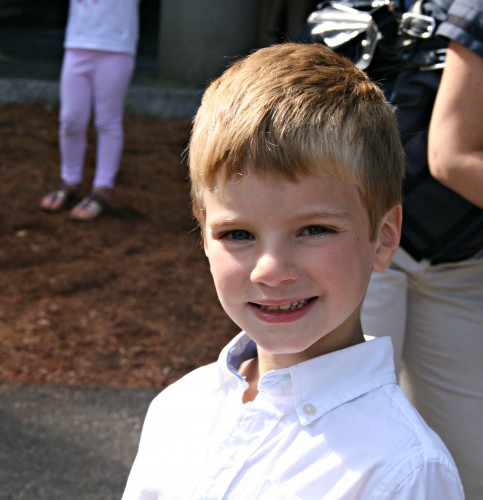
Whit, 1st grade. June 2012

Grace, Beginners. June 2008
Grace, Kindergarten. June 2009
Grace, 1st grade. June 2010
Grace, 2nd grade. June 2011
Grace, 3rd grade. June 2012
Whit, Beginners. June 2010
Whit, Kindergarten. June 2011
Whit, 1st grade. June 2012
I separated my shoulder last fall, part of my brief sojourn in and introduction to the foreign and awe-inspiring land that is pain. The injury hurt a lot in the immediate aftermath, and it has mostly but not entirely healed. I’m told that’s part of the deal with separated shoulders: the joint is never quite the same again. On random days, doing motions I do every day I will experience a startling jolt of pain. I can never predict when or why it will come. Also, I have a small but noticeable bump where my collarbone meets my shoulder. Fortunately my collarbone and shoulder are sort of bumpy in general, so it’s not quite as stark as it might be, but it is still noticeable if you look. I have a bump and I always will.
After 6 weeks of recovery, I went back to my orthopedist. I asked him, tentatively, whether the bump would ever go away. He is a tall, gentle man about my age, and he looked directly at me in the small room. I’ll never forget what he said next.
“No, it won’t.” I swallowed. “But you know what? If you’re living, you’re going to get bumps. I have a bump on my shoulder. You’re 37. Don’t we all have bumps? Everybody’s got a bump.”
I laughed it off in the moment, but in retrospect I think there was deep wisdom in this comment. Of course this moment has been on my mind lately as Grace’s collarbone heals. She has a small but visible bump that we are told will flatten out as she grows. It’s on her left side, too, and I find this parallel both totally coincidental and breathtakingly not.
These bumps are just like our scars, outward manifestations of places we’ve been broken and healed. Whit’s long scar on his leg, the trace of a skidding epi-pen, has already faded from angry red to raised white. Grace’s broken bone, originally an enormous protrusion from her collarbone, has begun to flatten out and presumably the bones have begun to knit together. At 7 and 9 my children have already been marked by life. I myself am a map of scars, internal and external: several different bones healed, spots where suspicious moles were removed, the scar where I was hit on the face by a wine press when we lived in France.
We are all marked by our passage through life. Some of these marks are visible and some are not. I think it is valuable to remember the moments and experiences that made marks on us, for better or for worse. They are part of what shaped us into who we are now, after all. This reminds me of a passage from Donald Miller’s lovely book A Million Miles in a Thousand Years
Last year, I read a book about a man named Wilson Bentley, who coined the phrase “No two snowflakes are alike.” He is the one who discovered the actual reality that no two snowflakes are geometrically the same. Bentley was a New England farmer who fell in love with the beauty and individuality of snowflakes…. What amazed Bentley was the realization that each snowflake bore the scars of its journey. He discovered that each crystal is affected by the temperature of the sky, the altitude of the cloud from which it fell, the trajectory the wind took as it fell to earth, and a thousand other factors.
Big thanks to Erin, who told me she likes her own private collarbone bump for the reminder it is of her brave, tough child self. I hope Grace feels the same way someday.
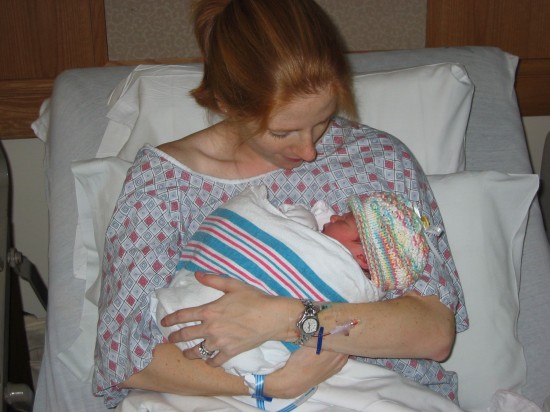
This is within the first hour of Grace’s life. I am bewildered.
That my article on The Huffington Post, 10 Things I Want my 10 Year Old Daughter to Know, resonated with readers was immensely, heart-fillingly gratifying. I am hugely honored and deeply humbled. I was buoyed all last week and weekend by the knowledge that my words – the deepest wishes of my mother heart, at this particular point in my daughter’s life – had burrowed into the thoughts and feelings of even perfect strangers.
And the comments on the piece blew me away. I realized there are things in that piece I passionately wish I’d said differently. Many of the comments were kind, and I cried as I read them, sad for the people who said they wished they’d had parents who had spoken to them like this and deeply touched by people who told me I was a good mother.
See, the thing is, I was never really thought of myself as a mother. Early on in our childhood, my sister and I took on roles within our family. I’m not sure exactly how this “taking on’ occurred, because I am certain it was subconscious on the part of all involved. But as stories and beliefs about a child sink into family lore they likewise seem to saturate our very cells. I was not particularly maternal, it seemed. I never babysat. I wasn’t very interested in dolls. I had literally never changed a diaper until I changed Grace’s. The fact that I adored being a camp counselor belies the assertion that I wasn’t especially interested in children, though it’s true my charges were teenagers and not in fact that much younger than I was.
An endocrine specialist told me when I was 23 that I would never get pregnant without significant intervention. I remember that last experience vividly: I walked away from the appointment feeling grateful to finally understand what was going on with my body, but also with a chilling sense of an emotional instinct being confirmed by my physical body. I wasn’t focused on being a mother, and now it seemed that my body didn’t know if it ever wanted to be one anyway.
And then I got into business school and at age 24 threw myself headlong over the cliff towards the world of Career. It’s not that I didn’t want kids, not at all. I did always assume I would have children, but truthfully I never thought very much about it. I never defined myself through the future children I would have, never planned for that life.
And then.
Those 2 lines on February 15, 2002 changed everything. They blew a hole through that endocrinologist’s certainty that I’d never get pregnant on my own, for one thing. But they also indicated that I’d stumbled onto a new path, one that would meander through dark cul de sacs and swamps before eventually coming out into a light so bright and vivid I still find myself blinking into it, like Plato coming out of his cave.
My embrace of motherhood was not immediate. Oh, no. In fact my put-aside memoir was mostly about that, about the slow and treacherous passage from the moment I delivered my daughter myself to falling in love with her as I’d been told I would.
And yet here I am, a mother almost 10 years, and it is absolutely, undeniably true that this is the central role of my life. (I feel the need to acknowledge that I am both aware of and grateful for my good fortune in conceiving and bearing healthy children). I have been changed in countless, indelible ways by becoming a mother. One essential one is not a change so much as a return, to the page, to writing, to something I had forgotten I needed. My subject chose me, I recently observed, and while that subject is not specifically “motherhood” it certainly arrived on the backs of my blue- and brown-eyed children, announced itself slowly but insistently as their lives unfurled with dizzying speed in front of me.
The truth is that I feel like a fraud, sometimes, like I’m not a “natural” mother, both because my entry into this role was so fraught and because for so long I was not one of those women whose whole self was oriented towards eventual motherhood. I suspect this is why the supportive Huffington Post comments meant so hugely much to me, because there I still contain a reservoir of insecurity about my mothering, my motherhood. I actually believe that many mothers share this deep rooted uncertainty and anxiety, for a host of reasons not necessarily the same as mine.
I have written before, and continue to believe, that most of our suffering in this life comes from our attachment to the way we thought it was going to be. My experience growing into the role of mother, an identity I hadn’t thought much about that has nevertheless come to define my sense of myself, shows me that letting go of those attachments can both relieve suffering and show us great, unexpected joy. Let’s keep letting go of how we thought it was going to be. Who knows what startling joys and surprises lie ahead.
Only the rereading counts, Nabokov said… For we live with those retrievals from childhood that coalesce and echo throughout our lives, the way shattered pieces of glass in a kaleidoscope reappear in new forms and are songlike in their refrains and rhymes, making up a single monologue. We live permanently in the recurrence of our own stories, whatever story we tell.
– Michael Ondaatje, Divisadero
As I sat in pigeon the other day in yoga, listening to my breathing, the familiar mindfulness meditation language rose up in my head: may I be healthy, may I be happy, may I be calm, may I live with ease. (enormous apologies to Dani, Karen, Katrina, and all of you who can tell me how wrong I have it… that’s how the words come to me, so I’ve decided not to fight it!)
It occurred to me that that was really it: Ease.
That’s what I want. Everything else I say I want can be folded into this single thing. I want to live with ease. To let the clouds of my emotions and reactions skid across the sky of my spirit without overly attaching to them. To let the weights of sorrow and joy, which are part of my life in near-equal measure, slide off my shoulders rather than staggering under them.
I grimaced as my hips screamed (pigeon is without a doubt my least favorite yoga pose, and equally unquestionably the one I need the most) and tried to return to my breath. Calm, health, peace, trust, light. They are all captured by ease. There was nothing easy about the discomfort – okay, fine, pain – I felt sitting there, my forehead sticky against my mat, my hip burning, my eyes shut as I tried to simply breathe. This is not ease, I thought, teeth gritted. But it is, almost surely, the path to ease.
I don’t know that I can untangle that paradox yet, but it posits an unavoidable truth: to achieve the life I want – a life with at least some quality of ease – I must head straight into the discomfort and learn to sit there. Only by facing that which causes pain can I dissemble it, reduce its power, learn to live without such ferocious reactions.
Which brings me back to the breathing and the mantra. Following those things, hand over hand like palming a rope to lead me through a dark room, seems the only way through. Through to what I truly, deeply, essentially want: ease.